Mold
Is Black Mold Dangerous? What Atlanta Homes Face
Stachybotrys, the black mold myth, and what air quality testing and species identification actually tell an Atlanta homeowner about real health risk.
Read article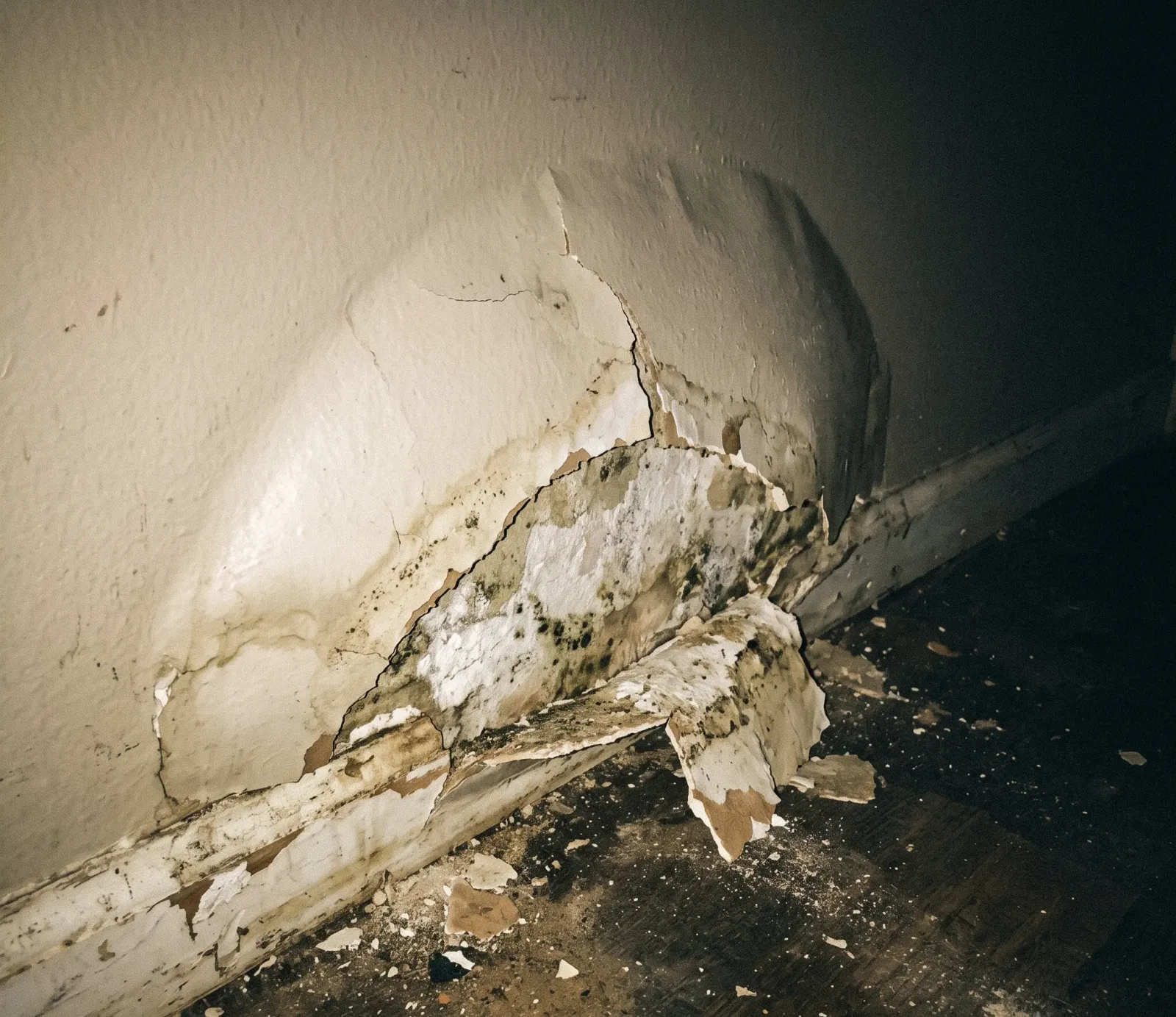
Contained removal that keeps spores from spreading through your home.
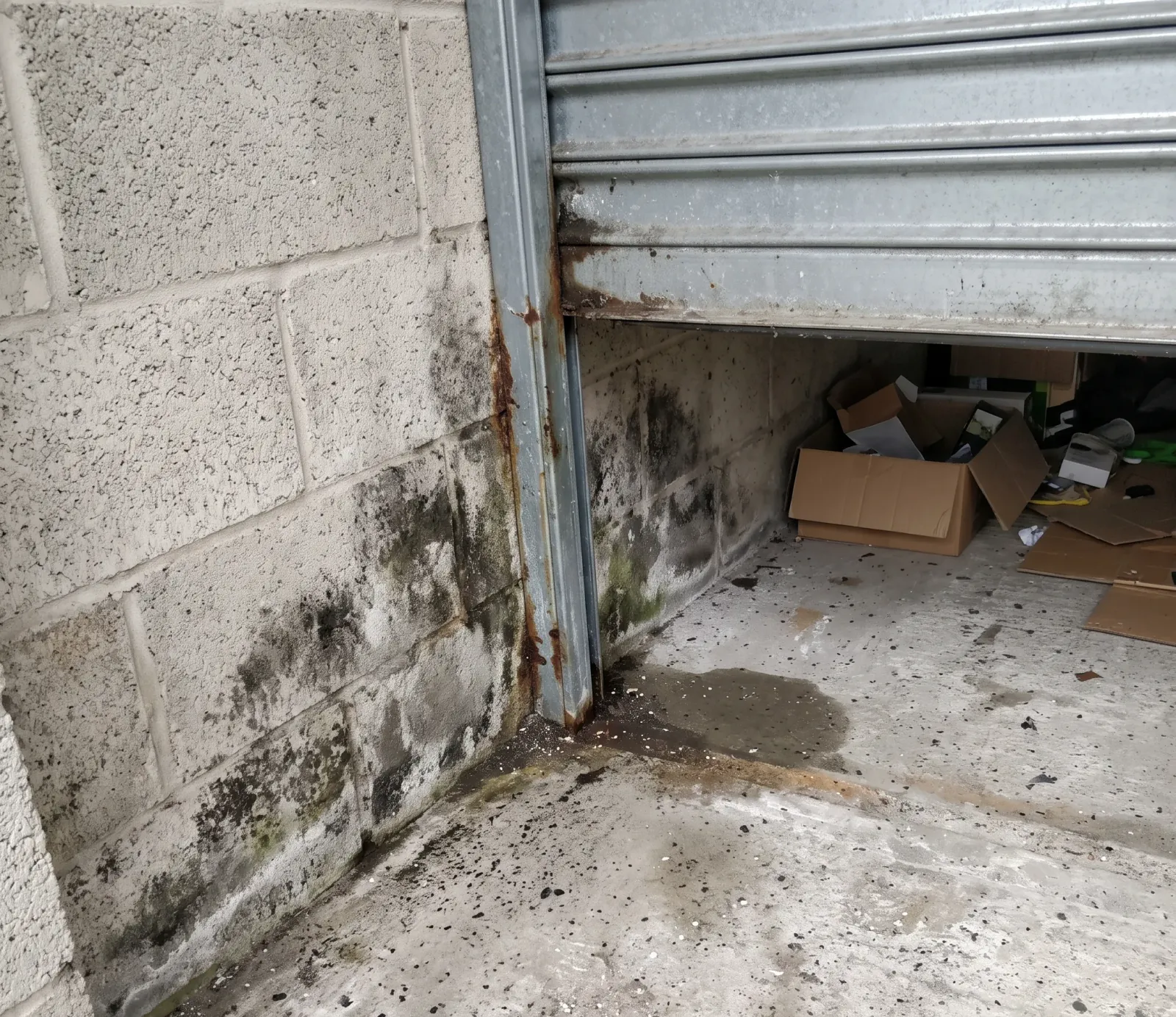
Old plaster in a Candler Park bungalow, a musty crawl space under a Kirkwood ranch, a basement near Peachtree Creek that never quite dried after the last downpour — mold shows up in Atlanta wherever moisture sits still. Bathrooms without a working fan, closets against an uninsulated exterior wall, and any framing that got wet during a plumbing leak or roof failure all colonize fast once the surface stays damp for a day or two.
A pro walks the affected rooms first, mapping how far spores likely traveled before sealing off the work area with sheeting and setting up negative air so nothing drifts into the rest of the house. Drywall and insulation that stayed wet too long usually count as non-salvageable and come out; framing and subfloor get cleaned and treated instead. Older sections of Grant Park and Reynoldstown, with tight attics and slow-draining lots, often need more containment than a newer build near Vinings, which adds time and cost.
Whether you're in West End 30310, Cascade Heights 30311, Grant Park 30312, or elsewhere around Atlanta, mold remediation is arranged around the conditions on the ground in and around Atlanta, so the plan fits the building rather than a template.
For a private home, residential water damage restoration sets out what a visit involves. For a shop, office, or tenanted building, commercial water damage restoration is the right starting point.
A musty smell that gets stronger in a closed room, especially near an exterior wall or under a window, usually means spores are already colonizing a porous material behind the surface. Discoloration on drywall or baseboards is the visible half of it. In Atlanta, that smell shows up fastest in a house that had water intrusion weeks ago and dried on the surface only, while the stud cavity or subfloor underneath stayed damp long enough to start growth nobody could see.
Peeling paint, bubbling drywall, or a baseboard that has gone soft are signs moisture has been sitting behind the material rather than passing through it. Once a porous material like drywall or wood trim holds water for more than a day or two at Atlanta's summer humidity levels, colonization can start before the surface ever looks wet. By the time paint is visibly failing, the material is often already non-salvageable.
Musty odor without visible growth still counts as a sign. Colonization can start behind a wall, under vinyl flooring near Virginia-Highland, or beneath cabinetry before a spore-laden smell ever reaches the room you're standing in. Porous material trapped against a slab or a crawl space wall in a humid Atlanta summer holds moisture long enough for growth to establish out of sight. Don't wait for a visible patch — an odor alone justifies containment, air sampling, and a look behind the finish material before it spreads further.
Containment goes up first, sealing the affected room or crawl space off from the rest of the house so spores in the air do not travel to unaffected rooms while work is underway. Negative air pressure keeps that seal doing its job for the duration of the job.
HEPA filtration and air scrubbers run inside the containment for the duration of the work, pulling airborne spores out of circulation while source removal is underway.
Non-salvageable porous material comes out. What can be saved gets an antimicrobial or biocide treatment, and exposed surfaces may be encapsulated once they're clean.
Containment stays up and air scrubbing continues until air quality inside the barrier is where it needs to be, with documentation kept for insurance or resale.
Older Atlanta housing stock near Grant Park or Candler Park often has original wall cavities and crawl spaces that were never built with a vapor barrier, and newer slab construction elsewhere in the city traps moisture against porous material with nowhere to drain. Either way, once colonization starts it keeps spreading through connected framing until source removal and containment stop it, not paint.
There's no state license for mold remediation in Georgia, and no legal line separating who can assess a job from who can remediate it — one company can legally do both. That makes the actual standard whatever a crew follows on site: containment set up before anything is disturbed, negative air pressure held inside it, and HEPA filtration running for the duration, so spores from a colonized area in a Virginia-Highland bungalow or a Decatur ranch don't spread to the rest of the house.
Georgia has no state license for mold assessors or remediators, and no separate rule keeping the company that tests a property apart from the one that cleans it up the way Florida's licensing does. So a second look at finished work, whether that is a walk-through or air and surface samples, comes from what an insurer expects and what a careful contractor builds into the job on their own, not from a Georgia statute. Ask how that verification step is handled before work starts near Chamblee or Dunwoody.
Two houses on the same Grant Park block can carry different foundations and different price outcomes for the same storm. A daylight basement drains and dries faster than a sealed crawl space near Utoy Creek holding standing water. The licensed pros we connect you with measure moisture first, then quote against what they actually find.
| Insurance Help | Documentation | Claim Support |
|---|---|---|
| Structural drying is billed by the number of days equipment has to run and how many air movers and dehumidifiers the space needs, which ties directly to Atlanta's summer humidity slowing evaporation. A drying job started in July near Piedmont Park can take longer than the same square footage in a drier month. | Water sits differently across Atlanta than most homeowners expect. Red clay under Grant Park or Inman Park drains slowly, so it collects against foundations after a storm rather than soaking away. Newer slab construction near West Midtown or the BeltLine hides moisture under the floor instead. Older sections near Sweet Auburn still run on aging combined sewer lines, which changes what a heavy rain actually pushes back into a basement. | an estimated $510–$4725 |
| Drying time and cost track moisture readings inside walls and subfloor, not a fixed number of days quoted up front. A saturated crawl space under an older home in Candler Park may need daily monitoring for longer than a slab condo near West Midtown, since the materials hold water differently. | Water moves downhill fast in a city built on ridges and valleys, which is why a storm that floods a crawl space near Peachtree Creek can leave a basement in Grant Park untouched. Red clay under Atlanta holds water instead of draining it, so runoff sits against foundations longer than most homeowners expect. The licensed pros we connect you with read those signs before they start drying anything. | an estimated $600–$6750 |
| The drying phase is priced on equipment-days rather than a flat fee, since a house with hardwood flooring near Virginia-Highland dries on a different schedule than a house with exposed studs and concrete. Humidity indoors during an Atlanta summer is part of what determines how many days that equipment stays running. | Water moving through a house in Atlanta rarely stays where it started. It travels along the low-permeability red clay under the slab, seeps into a crawl space near Peachtree Creek, or backs up through older lines near Grant Park. The licensed pros we connect you with track where it went before they measure what it ruined, because guessing at the path costs more than checking it. | an estimated $900–$10800 |
| Cost during the drying stage depends on how many dehumidifiers and air movers a space actually needs, checked daily against moisture readings rather than assumed. A two-story home near Druid Hills with wet insulation in the walls costs more to dry than an open basement with concrete floors and no drywall. | Job size in Atlanta usually comes down to how far water traveled before anyone caught it, not just square footage. A saturated crawl space near Peachtree Creek and a slab condo in Old Fourth Ward land in different tiers for that reason. The licensed pros we connect you with scope each room, note materials, and quote from what they actually find. | an estimated $1440–$18000 |
A quote before anyone opens a wall is a guess dressed up as a number. The licensed pros we connect you with price a Virginia-Highland or Grant Park job after moisture readings, not before, because clay soil, foundation age, and how far water traveled under a slab all move the final figure more than square footage does.
Not automatically. A musty smell alone doesn't tell you how far it's spread or whether it's active. What it does mean is something stayed wet long enough behind a wall or under a floor to start colonizing, which is worth having looked at before it reaches framing that costs more to open up later.
Bleach kills surface mold you can see and reach, but it does nothing for spores that have colonized inside drywall, subfloor, or framing, and it can't get behind a wall cavity at all. Non-salvageable porous material has to come out; a biocide or antimicrobial treatment is applied to what stays, not sprayed over what should be removed.
It depends on the size of the affected area and what's behind the surface. A contained bathroom or closet job might run a few days. Anything involving a crawl space, a finished basement, or framing that source removal has to open up takes longer, because containment and air scrubbing have to run until air quality inside the barrier clears.
Containment means sealing off the work area with plastic sheeting so spores can't travel to the rest of the house while material is being removed. Negative air pressure is created inside that sealed space so air flows in, not out, through a HEPA filtration unit. Together they're what keeps a Buckhead or East Atlanta job from cross-contaminating rooms that were clean to begin with.
Georgia doesn't require a mold license, so there's no state credential to check. What matters is whether the crew documents the job properly and whether the post-work check is done independently rather than by the same people who did the removal, since that's what an insurer or a future buyer's inspector will actually look at.
Sometimes, if the growth is limited to a small, accessible area and the source has already been fixed. But once it's spread into a wall cavity, a crawl space, or ductwork, DIY cleaning tends to disturb colonized material and push spores into air the rest of the house is breathing, which is the opposite of what's needed.
Basements near Grant Park and Inman Park sit on lots that slope hard toward the street, so a heavy storm sends water downhill and it collects where the foundation meets lower ground. Atlanta's clay slows drainage further, which is why the same address can flood twice in one wet month.
Foundation type in Atlanta tracks the lot more than the neighborhood. On a sloped street in Candler Park, one house can sit on a walkout basement while its neighbor has a crawl space, just because of how the ground falls toward the road. Assuming a whole street matches is a bad guess.
Stachybotrys, the black mold myth, and what air quality testing and species identification actually tell an Atlanta homeowner about real health risk.
Read article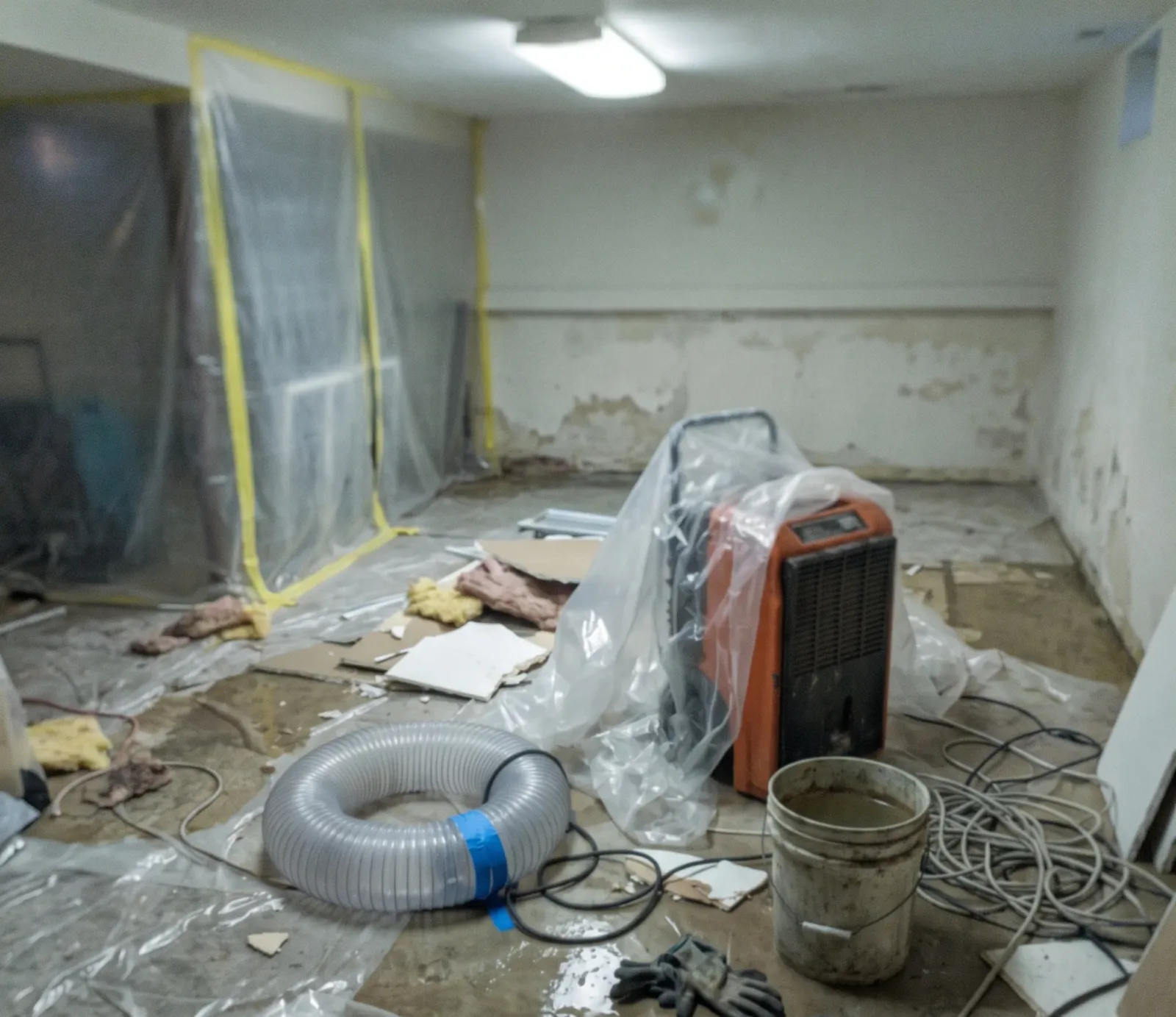
A wall that keeps growing mold after every cleaning usually has a hidden moisture source behind it. Here is why surface cleaning alone can't stop recurring growth, and what actually finding the source in a crawl space, attic, or wall cavity involves before it comes back again.
Read articleEvery water loss in this city carries its own path, its own materials, and its own clock, so a page like this can only describe the general shape of the work. For the specifics of your address near Virginia-Highland, East Atlanta, or wherever you are calling from, the licensed local pros in this network can walk the affected rooms, explain what they find, and lay out the drying plan before anything starts.
Call (404) 496-7950