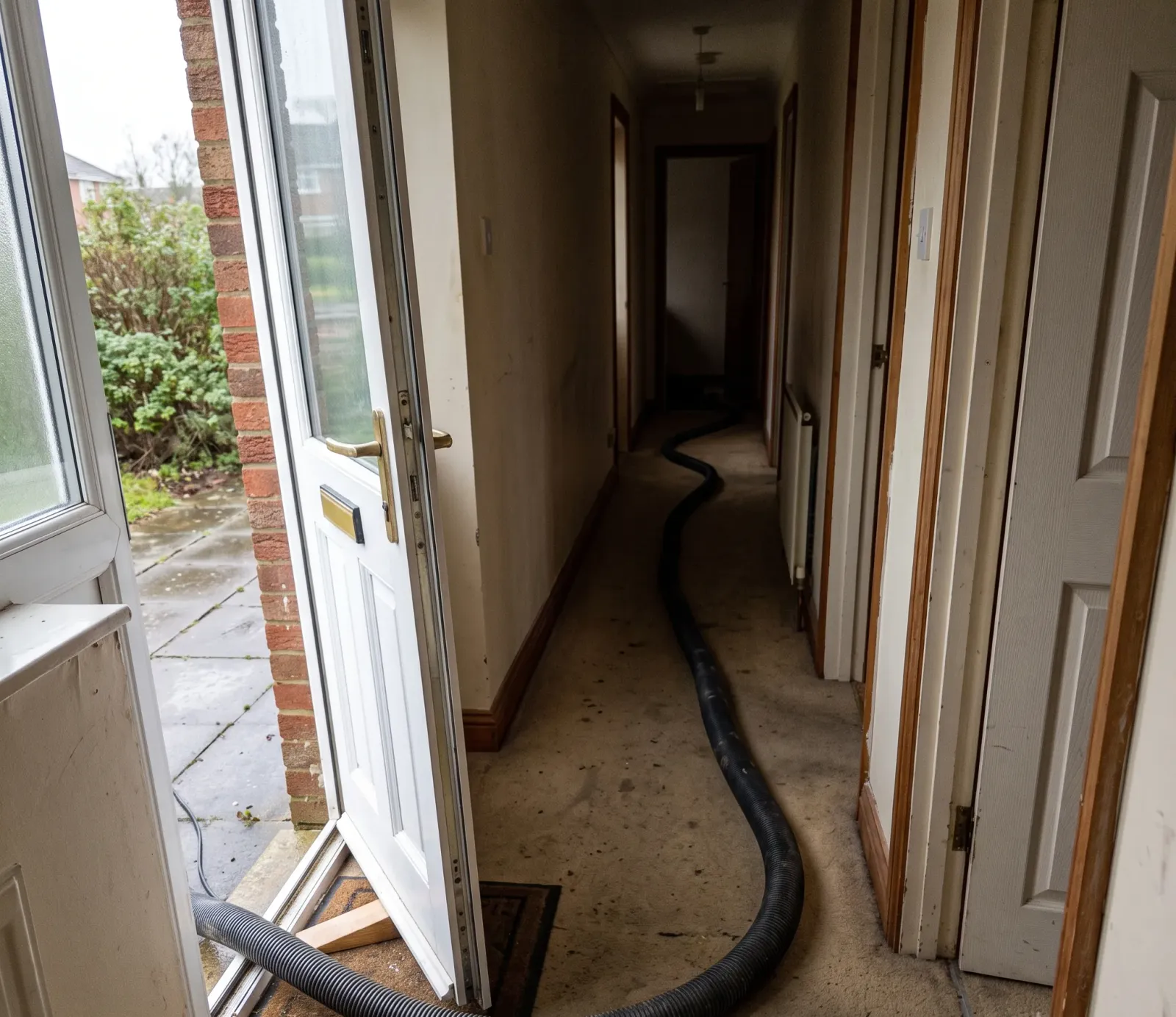
Emergency Water Extraction
Fast water removal when a pipe or storm floods your home.
Learn about Emergency Water ExtractionCentury-old bungalows on aging cast iron and clay laterals, graded toward low ground.
Kirkwood sits in east Atlanta/DeKalb, full of early-1900s bungalows built with plumbing to match their age. Cast iron stacks and clay laterals run under streets like Hosea Williams, and the Kirkwood Urban Forest marks where older lots slope toward low ground that collects runoff fast in a hard storm.
Atlanta's red clay, hilly terrain, and older sewer lines each shape how water damage starts and spreads through a home.
Older houses in Kirkwood 30317 have generally been worked on more than once, and every round of work left a seam. A lower level finished in the nineties or a bathroom added off the back covers the original outside wall, so a slow leak behind it can run for months with nothing showing in the room.
Being close to South River changes the whole picture. Standing water in gutters, low-lying yards, and poor drainage becomes a flooding risk within a week of heavy rain, so the first thing the licensed pros we connect you with do on these properties is walk the grounds for water paths.
Atlanta's humid summers slow drying badly once water gets into a Kirkwood bungalow's crawl space or basement. Wet framing and subfloor release moisture slowly into already-damp air for months at a stretch, which is how a fast leak becomes a mold problem later. Spring is the wettest stretch of the year here, and it is when saturated red clay stops taking in anything new. Runoff reaches the nearest low point within minutes. A downpour that clears in an hour can still leave water working under a building long after the sky is clear.
Kirkwood 30317 has East Lake Golf Club, Kirkwood's Hosea Williams commercial strip nearby, which means multi-unit and commercial buildings as well as houses. Those jobs live or die on discretion and documentation — service outside trading hours, and a written record of every visit.
No call-out fee and no obligation. Here is roughly where Kirkwood 30317 jobs price out before we have seen the property.
| Service | Estimated cost |
|---|---|
| Emergency Water Extraction | an estimated $450–$1600 |
| Basement & Crawl Space Water Removal | an estimated $900–$5500 |
| Storm & Severe Weather Damage | an estimated $2400–$12000 |
| Sewage Cleanup | an estimated $1900–$8000 |
The Kirkwood Urban Forest holds tree cover over sloped, older lots nearby. Water off those slopes moves toward lower yards and foundations fast, which is exactly the kind of runoff that turns into a basement or crawl space problem after a hard rain.
Kirkwood's Hosea Williams commercial strip sits along one of the neighborhood's older graded corridors. Storm drains here were built for a smaller, older Kirkwood, so heavy bursts can back up faster than newer infrastructure elsewhere in the metro would allow.
Candler Park and Grant Park border Kirkwood and share its housing age and lateral type. A cast iron or clay line failing in one of these bungalow neighborhoods is common enough that homeowners here should know the signs before water shows up inside.
Fast water removal when a pipe or storm floods your home.
Learn about Emergency Water Extraction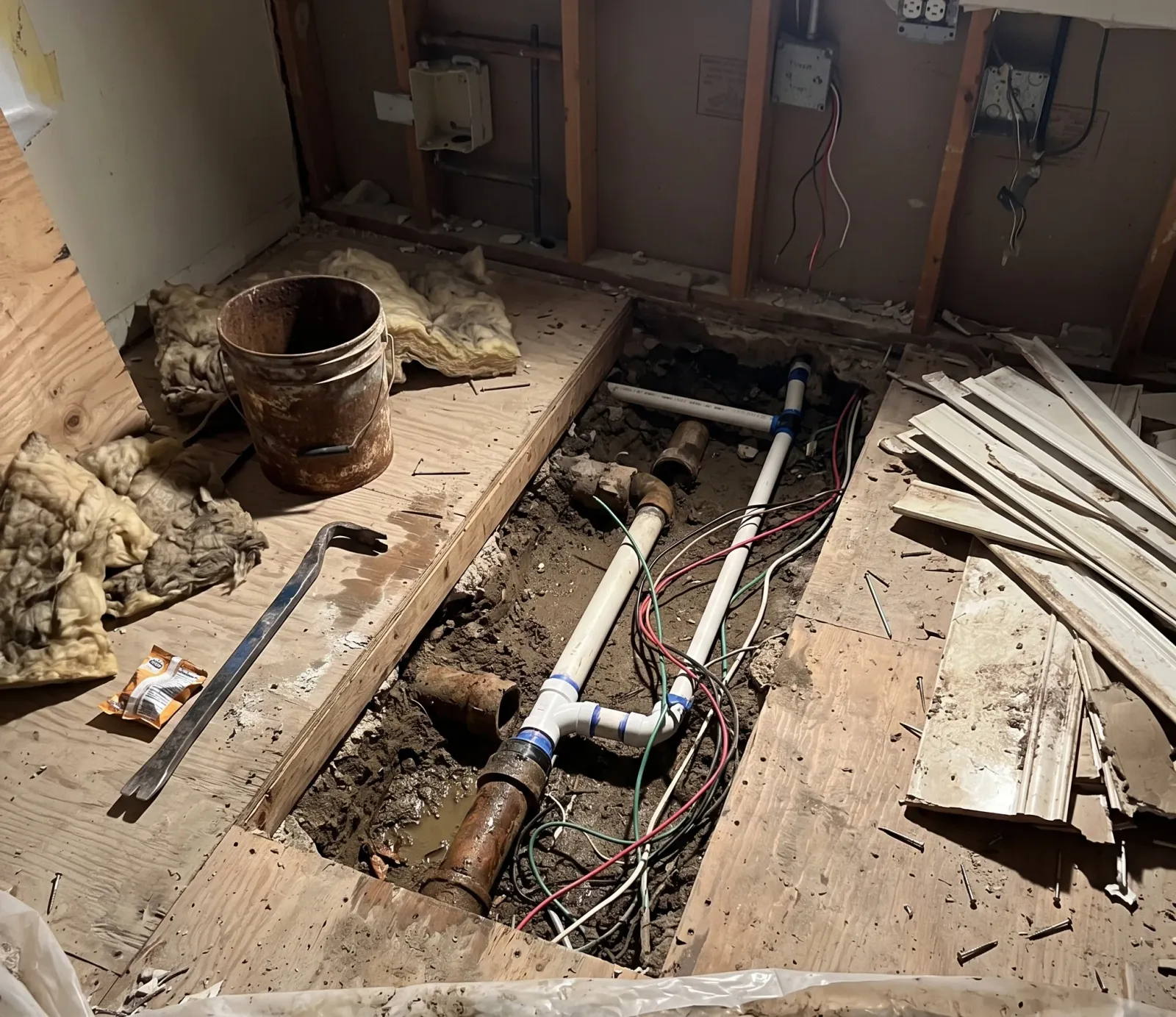
Getting standing water out of basements and crawl spaces fast.
Learn about Basement & Crawl Space Water Removal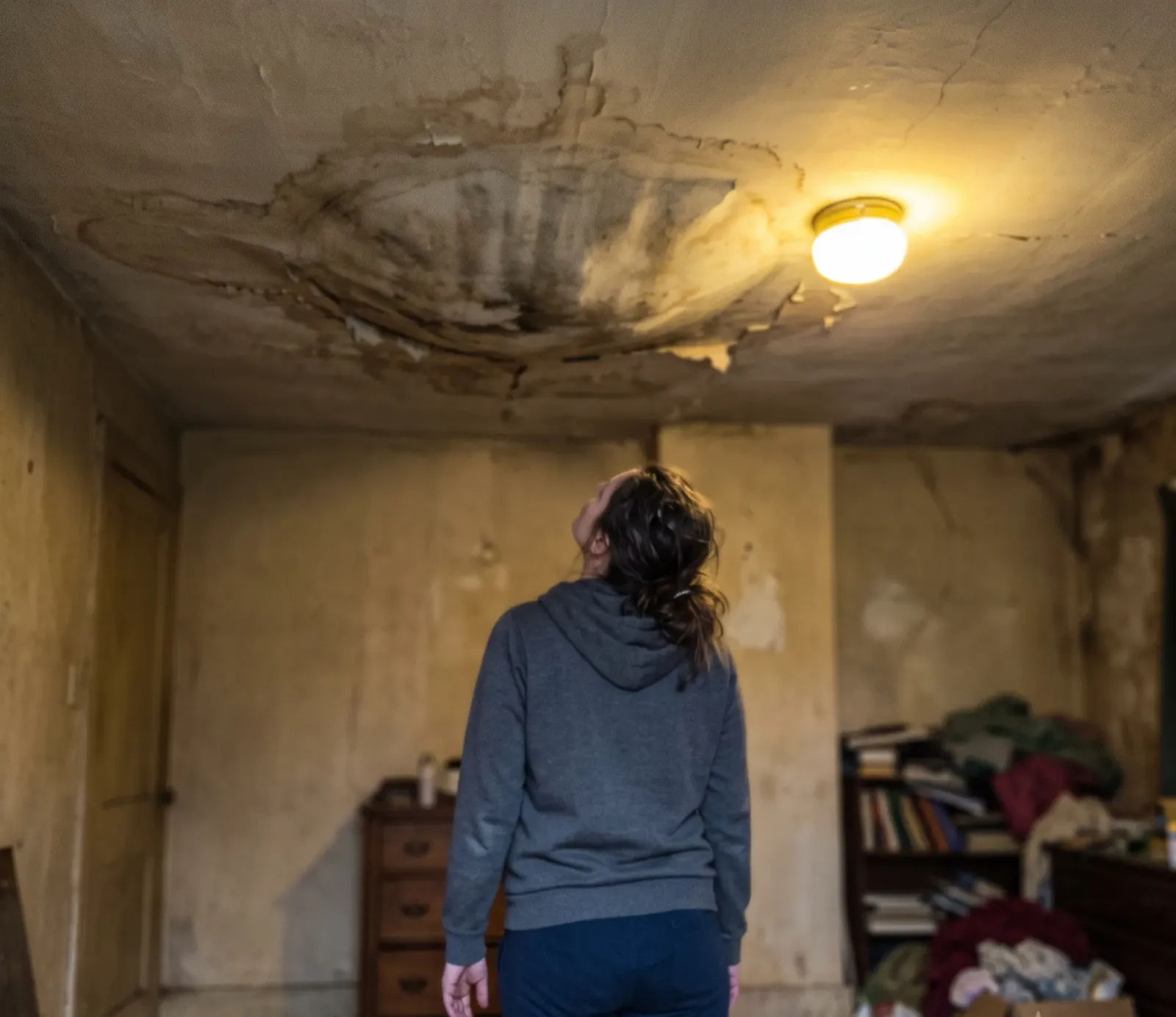
Fast tarping and board-up after Atlanta storms
Learn about Storm & Severe Weather Damage
Kirkwood's older lots are graded the way builders laid them out a century ago, often sloping toward lower yards and street-level storm drains sized for a smaller neighborhood. A hard thunderstorm can outrun that drainage quickly, pushing water toward basements and crawl spaces before it ever reaches a creek.
Many Kirkwood bungalows date to the early 1900s, built with cast iron stacks and clay tile laterals similar in age to Candler Park and Grant Park homes nearby. Roots and age can crack these lines over the decades, and a cracked lateral backing up into a house looks like sudden flooding but starts underground.
It depends on the lot. Kirkwood's bungalow-era construction sits on a mix of foundations, and slope on an individual lot matters more than the neighborhood as a whole. Either a basement or a crawl space under an older Kirkwood home can hold moisture long after a leak, especially with limited ventilation.
Kirkwood homes are mostly early-20th-century bungalows, and many still run on the original cast iron or clay lateral pipes. Those lines are decades past their design life, and root intrusion or a collapsed section can cause a sewer backup with little warning. If drains in your Kirkwood home back up together, that points to the lateral, not one fixture, and it needs prompt water extraction.
Yes. Kirkwood is covered for 24/7 emergency response through the licensed pros we connect you with. Whether it's a burst pipe under an older bungalow, a roof leak, or water pooling in a basement or crawl space, someone can be reached any hour. Structural drying starts with moisture meter readings so the crew knows exactly where the water traveled before drying equipment goes in.
Usually the same day, yes. Urgent jobs jump the queue here: active flooding, a sewage backup, or water already reaching electrical outlets. Those are covered around the clock. Anything that can safely wait is booked at the standard rate instead.
Not every block in this part of Atlanta sits on the same ground or drains the same way after a hard rain. That difference matters more than most homeowners realize until water is already inside. Whatever combination of slope, soil, and foundation your house happens to have, the licensed pros we connect you with have worked this kind of ground before. Call and describe what's happening, and let someone who knows this area take it from there.
Call (404) 496-7950