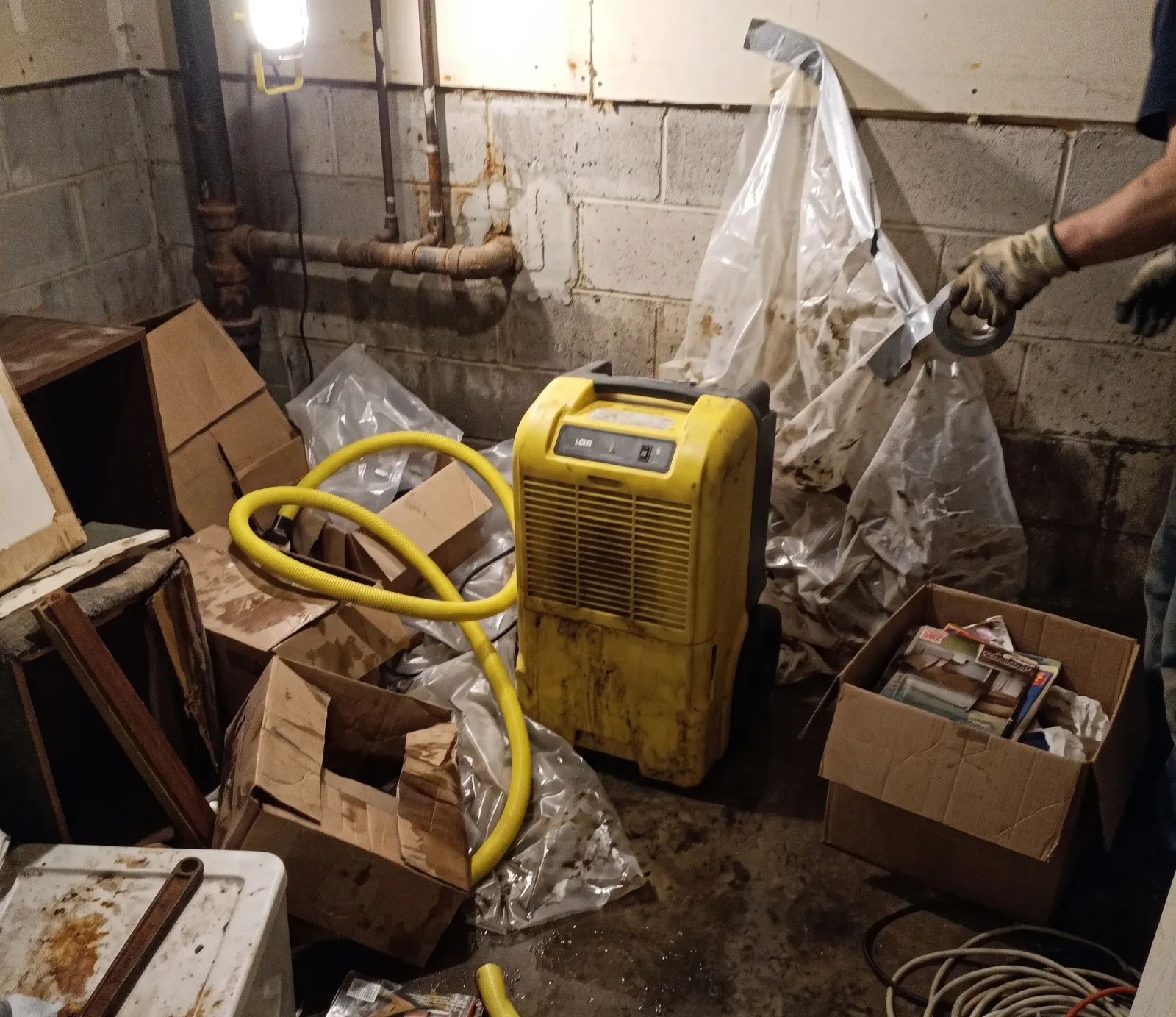
A Freeze Snaps Pipes Built for Mild Winters
A roof leak in Atlanta rarely announces itself where the water actually enters. Rain follows a rafter or a valley for feet before dropping, so a stain over the kitchen might trace back to flashing near a chimney on the far side of the house.
Older intown roofs near Grant Park and Ormewood Park often carry decades of patched valleys and reused flashing. A hard freeze that cracks a shingle in January might not leak until a heavy spring storm finally drives water through the same crack.
Older sections of Atlanta near downtown still carry combined sewer and aging cast-iron lines, and heavy storms push those systems past capacity. A basement backup after a summer downpour in a neighborhood like Cabbagetown or Reynoldstown is a different problem than clean rainwater intrusion, and it gets treated differently by the licensed pros we connect you with.
Why Atlanta Clay Traps Water
- Signal
- A basement seepage stain sits low, near the foundation, and often smells of damp concrete. A roof leak stain sits high, near the ceiling or an upper wall, and follows gravity down from the attic rather than up from the slab.
- Timeline
- Condensate line trouble around an attic air handler drips steadily in one spot near the unit, often with a musty smell. A roof leak's location shifts with wind direction and storm intensity, since water can enter at a flashing seam and travel before it shows.
- Delay cost
- A roof leak left alone through even one more Atlanta storm season commonly turns a small ceiling stain into rotted decking, soaked insulation, and a mold problem inside the wall cavity.
- Coverage
- A cast iron pipe or clay sewer lateral failure under a slab shows as a wet floor or a smell with no obvious water source. A roof leak always has a visible or traceable path down from the attic or roof deck above the stain.
- First check
- They check insulation, roof decking, and framing near the leak for soaked or soft material, and test moisture levels in the ceiling and surrounding walls to see how far the water has spread before starting any drying or repair work.
- Drying Standard
- Roof leaks in Atlanta cluster around severe thunderstorm season from spring through summer, when wind-driven rain finds gaps that stayed dry all winter, and again after a hard freeze cracks shingles or flashing that only starts leaking once warmer rain returns.
- Mold Window
- an estimated $600–$3000
Where Older Sewer Lines Add Risk
A stain on an upstairs ceiling near Virginia-Highland or Morningside is sometimes blamed on the roof when it is actually a supply line or drain pipe failing in the floor above, since both can produce a ceiling stain below. The tell is timing and location relative to rain. A roof leak only worsens with or shortly after rainfall and traces back toward an exterior wall or valley; a plumbing leak stains regardless of weather and sits near a bathroom or kitchen line.
Why Red Clay Traps Water Here
The licensed pros who take this kind of call first find where water is actually entering, not just where it shows up on the ceiling, tracing the path along framing back toward the roof deck, flashing, or a chimney joint before opening anything up.
Once the entry point is found, they check how far water has traveled through insulation, framing, and any wiring nearby, then open the ceiling only as far as the wet material actually goes, not by guesswork.
Slab-on-grade construction is common in newer parts of the metro, and a slab does not announce a leak the way a crawl space does. Water can travel under flooring for days near Buford Highway or West Midtown condo conversions before a stain or a smell gives it away, which is why a quiet slab leak often costs more than a visible one.
SLAB HOMES VS CRAWL SPACE HOMES: DIFFERENT DRYING NEEDS
| What You Get |
What You Pay |
|---|
| Water sits differently across Atlanta depending on where you are standing. A house near Peachtree Creek in Druid Hills drains slower than one on a ridge in Buckhead, because the clay underneath holds runoff instead of letting it pass through. That difference is why two calls on the same storm night can need two different responses. | Foundation type changes block by block here. A raised pier home in Inman Park behaves differently in a storm than a slab condo in a West Midtown loft conversion, and a crawl space under a Virginia-Highland bungalow reacts differently still. Knowing which one is under a given house changes where water actually collects and how it needs to be dried out. |
| Older intown blocks near Cabbagetown and Reynoldstown carry infrastructure that predates most of the housing stock around it, and heavy rain can push a plumbing problem past a simple cleanup. Every job still starts the same way: fast extraction, honest moisture readings, and drying tracked until the numbers actually clear. | Basement flooding around Virginia-Highland or Druid Hills usually traces back to the red clay itself: water sits against the foundation instead of draining away, so a heavy rain turns into standing water inside within hours. The fix starts with pulling moisture out fast, not just mopping up what is visible on the surface. |
| Old Fourth Ward sits on ground that drains slowly. Rain soaks into clay soil and lingers instead of moving on, so water finds its way toward foundation walls hours after a storm passes. Add Atlanta's damp summer air and a wet spot can turn into a mold problem within two days. Waiting to call rarely helps. | Older sections near Virginia-Highland and Inman Park mix basements, crawl spaces, and slab foundations lot by lot, so what a house needs after water gets in depends on how it was built, not just where it sits. The licensed pros we connect you with walk the specific space first, then decide on equipment from there. |
What Insurance Actually Wants Documented
A tarp over a suspected leak can slow things down between now and a repair, but a roof leak that's gone unnoticed for a while can mimic a supply line drip or a condensate line failure at the ceiling, so don't assume the cause without someone checking the source.
The 24 To 48 Hour Mold Window
Water sitting inside a ceiling or attic insulation for days creates conditions mold can grow in, and some people report symptoms when mold is present. No outcome or illness can be promised. The realistic concern is a slow-growing colony inside a Grant Park or Ormewood Park attic that nobody sees until the ceiling is opened.
Water in the house? Call now.
Water moving through a wall or ceiling in Grant Park or Virginia-Highland doesn't wait for morning. Call now and get a licensed pro on the way.If standing water sat long enough for mold to start, that changes the scope beyond drying. Testing and remediation are priced separately from extraction, and the licensed pros in Atlanta connecting with you should explain that split before work begins, not after. Ask for it in writing, especially near Peachtree Creek or Proctor Creek flood-prone lots. pricing guide, and the service that handles this is Roof Leak Water Damage.