Now taking calls — fast callback for urgent water damage · (404) 496-7950
Structural Drying in Atlanta, GA
Atlanta, GA

Getting Framing and Drywall Back to Dry Standard in Atlanta, GA

Monitored drying to dry standard, tracked with daily readings

Whether you're in Inman Park 30307, Old Fourth Ward 30308, Midtown 30309, or elsewhere around Atlanta, structural drying is arranged around the conditions on the ground in and around Atlanta, so the plan fits the building rather than a template.

Nearly all of this work is residential: residential water damage restoration covers the approach for houses, while commercial and multi-unit buildings are handled under commercial water damage restoration.
Warning Signs

Signs You May Need Structural Drying

Framing Still Reads Wet

Once standing water is out, the framing, drywall, and subfloor still hold moisture the eye can't see. A moisture meter and a penetrating meter check what's happening inside the material itself, not just the surface, and those readings set the drying goal for the job. In a Virginia-Highland bungalow or a Morningside crawl space, the same soaked joist can read very different moisture content depending on the wood species and how long the water sat before anyone got to it. That number, not a guess, decides how long air movers and dehumidifiers stay running before the job is called dry.

Musty Smell With No Visible Water

Grain depression in wood framing is the visible warning sign of moisture that soaked in and pulled back out without being dried properly the first time. It shows up as cupped or raised grain along joists and subfloor edges. In older Atlanta neighborhoods like Kirkwood or Grant Park, where framing has been through decades of humid summers, this pattern is worth checking any time a leak or flood event has occurred.

Drywall Feels Cool or Soft

Atlanta's summer humidity works against every drying job the pros run, from a Decatur split-level to a condo near Ansley Park. High relative humidity outside slows evaporation from wet drywall and subfloor, and vapor pressure in the drying chamber can stall out if air movers alone are pushing moisture into air that's already saturated. That's when an LGR dehumidifier or a desiccant dehumidifier earns its place in the plan, pulling grain depression down instead of just moving damp air around the room. Daily readings on a drying log show whether the numbers are actually moving or just holding still.

How It Works

Our Structural Drying Process

Atlanta Moisture Mapping First

A moisture meter and penetrating meter map every affected area of framing, drywall, and subfloor, and an unaffected reference point is recorded to define this job's actual drying goal.

Setting Up the Drying Chamber

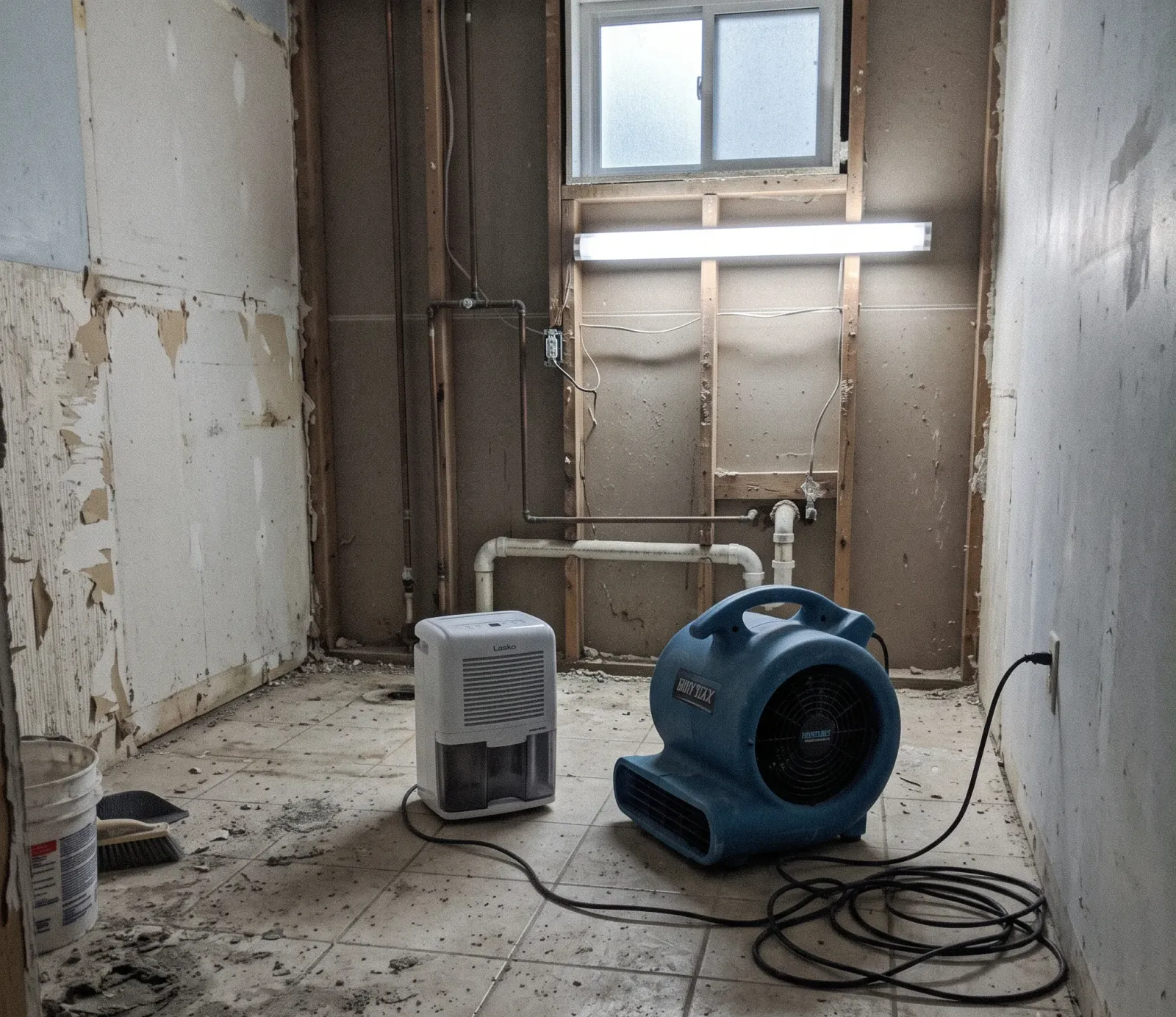
Air movers and an LGR or desiccant dehumidifier are set up together, sized to the space and chosen based on ambient humidity, to create a drying chamber that pulls moisture out of both materials and air.

Daily Readings and Log Tracking

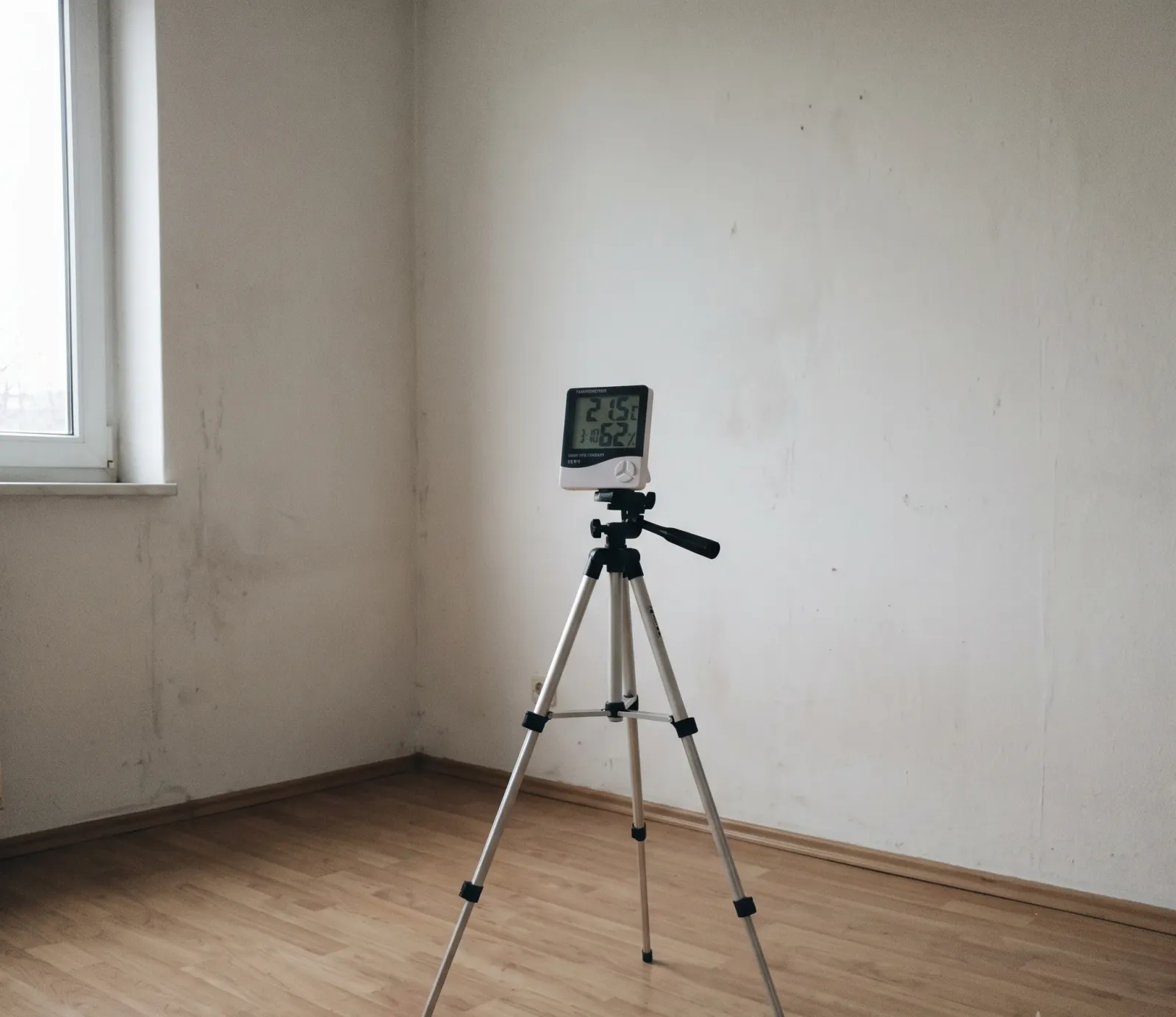
Daily readings with a thermo-hygrometer track relative humidity and vapor pressure in the drying chamber, adjusting equipment placement and settings as conditions change day to day.

Confirming Dry Standard, Atlanta Homes

Once moisture content readings match the unaffected reference area, dry standard is confirmed and logged, closing out the drying phase with documentation available for insurance review.

Why this matters

Atlanta's older housing stock, much of it framed decades before central dehumidification was standard, was not built with today's humidity loads in mind. Add in slab-on-grade construction common across newer parts of the city and daylight basements common on sloped, intown lots, and moisture behaves differently structure to structure. Monitored drying accounts for that instead of guessing at a universal drying time.

Licensing & Local Standards

Code-Compliant Structural Drying in Georgia

Why Atlanta Humidity Slows Drying

Drying to a dry standard means matching the moisture content of affected wood and drywall to an unaffected reference area in the same structure, not to a fixed number that applies everywhere. Psychrometrics, the study of air's temperature and moisture relationship, guides how air movers and dehumidifiers are set and adjusted. In a humid Atlanta summer, that drying goal takes longer to reach than the same job would in a dry climate.

Older Homes Near the BeltLine and Slab Builds

Daily readings with a thermo-hygrometer and penetrating meter track relative humidity, vapor pressure, and moisture content inside the drying chamber until numbers hold steady at goal. A drying log records each reading so there is a record of when materials actually reached dry standard. This matters in Atlanta because homes near Proctor Creek and other flood-prone low ground can take several extra days before conditions stabilize.

What It Costs

What Water Damage Cleanup Really Costs

The final number on a water job tracks square footage, category of water, and how many building layers got wet, not a flat rate. A one-room slab leak in a West Midtown loft prices differently than a crawl space job under a Grant Park bungalow after the same rainfall.

WHAT ATLANTA HOMEOWNERS PAY BY DAMAGE CATEGORY
Water CategoryContamination LevelSafety Steps
Emergency water removal in Atlanta usually runs on a per-visit call, priced by how much standing water there is and how fast the crew can get equipment on site. A townhome near the BeltLine and a ranch off Cascade Road can carry different numbers even with similar water depth, since access and layout change the work. Water that reaches a Grant Park basement or a Virginia-Highland crawl space follows Atlanta's red clay downhill, not straight through it, so the wet spot rarely marks where the trouble started. The licensed pros we connect you with trace that path, check moisture readings room by room, and start pulling water before it spreads toward drywall or framing near Ponce de Leon Avenue or Piedmont Park. an estimated $1020–$4725
The first visit after a pipe break or storm intrusion is priced around extraction volume and the number of rooms affected, not a flat citywide rate. A basement in Grant Park with standing water behaves differently than a slab home near Camp Creek Parkway, so the quote reflects the actual job, not a guess. A heavy storm over Virginia-Highland or Grant Park can push water into a house faster than most people expect. The clay under Atlanta holds runoff near foundations instead of letting it pass through, so a crawl space or basement near the South Fork Peachtree Creek can stay wet long after the rain stops. That lag between the storm and the damage is what this page is really about. an estimated $1200–$6750
Initial water extraction costs scale with square footage soaked and how deep the water sits, since that drives pump time and disposal. A crawl space intrusion off Peachtree Creek after heavy rain is a smaller job than a fully flooded finished basement in Morningside, and the estimate should say so plainly. Water moves fast once it gets under a slab or into a crawl space, and the red clay under most of Atlanta holds it there instead of draining it off. Whether the call comes from Grant Park, Virginia-Highland, or a high-rise near Buckhead, the licensed pros we connect you with get equipment on site quickly and start pulling moisture before it reaches drywall, subfloor, or the space beneath the house. an estimated $1800–$10800
This tier covers a single wet area with no standing water and no sewage involvement — a laundry room leak, a small bathroom overflow near Virginia-Highland or Grant Park. Drying equipment stays in place a few days while moisture readings confirm the studs and subfloor are back to normal. Most jobs at this level close out without any drywall removal at all. Ridge-and-valley terrain moves water fast here, and clay underneath slows it back down once it arrives. A house near Proctor Creek or the South River can flood in hours, not days, while Peachtree Creek runoff pools against a foundation that never sees fast drainage. Add older cast-iron lines near Sweet Auburn and Atlanta's summer humidity, and a small leak becomes a mold question within two days. an estimated $2880–$18000

The lowest number quoted over the phone is rarely the number on the final invoice. the licensed pros we connect you with would rather inspect the property near Inman Park or East Atlanta in person and give a range that holds, than promise a figure that changes once the flooring comes up.

Questions & Answers

Frequently Asked Questions

Do you use LGR or desiccant dehumidifiers?

Not always. An LGR dehumidifier pulls moisture from air that is already fairly dry more efficiently, while a desiccant dehumidifier keeps working in the humid conditions common across Atlanta from spring through fall. The choice depends on the space, the materials involved, and the readings taken once drying equipment is running, not on which one sounds stronger.

How long does structural drying actually take?

It depends on the material, the humidity in the space, and how long the water sat before drying started. A contained bathroom leak might reach dry standard in a few days. A crawl space job in a humid stretch of an Atlanta summer, or a slower-draining lot near a creek, commonly takes longer because the surrounding air itself is working against the equipment.

How do you know when something is fully dry?

Drying goal is set by comparing moisture content in the affected material to an unaffected area of the same type in the same structure, using a moisture meter and penetrating meter together. It is not a single number used on every house. Daily readings are logged until the affected area matches the unaffected reference within an acceptable range.

How long does structural drying usually take to finish?

Air movers alone do not reliably dry a structure in Atlanta's humid months. They move air across wet surfaces to speed evaporation, but without a dehumidifier pulling that moisture out of the room, the air just gets more humid and evaporation slows down. Pairing air movers with an LGR or desiccant dehumidifier is standard for a reason.

How do you know when a wall is actually dry?

A drying log is the record of daily moisture meter and thermo-hygrometer readings taken throughout the job, showing relative humidity and moisture content trending toward dry standard. It matters most when insurance is involved, since it documents that the structure was actually verified dry rather than assumed dry once it looked and felt normal.

How long does structural drying take to reach dry standard in Atlanta homes?

Not always. Extraction removes standing water first; drying is the follow-up phase where air movers and dehumidifiers pull remaining moisture from framing, drywall, and subfloor. Some Atlanta jobs, especially fast-caught leaks in Virginia-Highland or Grant Park homes, skip straight to drying if there's no standing water. Others, like a basement flood near the Chattahoochee River, need both. A moisture meter reading decides which phase applies.

How much does structural drying cost in Atlanta?

Summer humidity around Buford Highway and West Midtown keeps indoor air heavy even on a dry week, and a crawl space that still vents to the outside pulls that moisture straight in. Wet framing under those conditions stays wet far longer than most homeowners expect.

Local Ground Conditions

Why Atlanta Homes Flood Differently

A finished basement in Grant Park or a crawl space in East Lake gets wet for different structural reasons, so the fix looks different too. Before anything is torn out, the licensed pros connect with you to trace where the water actually entered and how far it traveled.

What to Do When Your Water Heater Bursts in Atlanta, GA
Water Damage

What to Do When Your Water Heater Bursts in Atlanta, GA

A water heater tank failure floods a utility space fast. Here is the order of steps that actually limits the damage: shutoff valve, main water shutoff, breaker, standing water, and what to document before cleanup starts.

Read article
Preparing Your Atlanta Home for a Hard Freeze
Local & Seasonal

Preparing Your Atlanta Home for a Hard Freeze

Atlanta's plumbing wasn't built for sustained cold, so a single hard freeze can catch a house off guard. Here's what to check before one arrives: exposed supply lines, hose bibs, cabinet doors, the thermostat setting, and where the main shutoff actually is.

Read article
Why Atlanta Creeks Flood So Fast After a Storm
Local & Seasonal

Why Atlanta Creeks Flood So Fast After a Storm

A look at why small Atlanta creek watersheds like Peachtree, Nancy, Proctor, and Utoy can flood within an hour of hard rain, what that water carries with it, and how creek flooding differs from an ordinary wet yard.

Read article
Get Started Today

Ready to Get This Handled

Every water loss in this city carries its own path, its own materials, and its own clock, so a page like this can only describe the general shape of the work. For the specifics of your address near Virginia-Highland, East Atlanta, or wherever you are calling from, the licensed local pros in this network can walk the affected rooms, explain what they find, and lay out the drying plan before anything starts.

Call (404) 496-7950
Free inspections & same-day service available
Call (404) 496-7950 Schedule Online