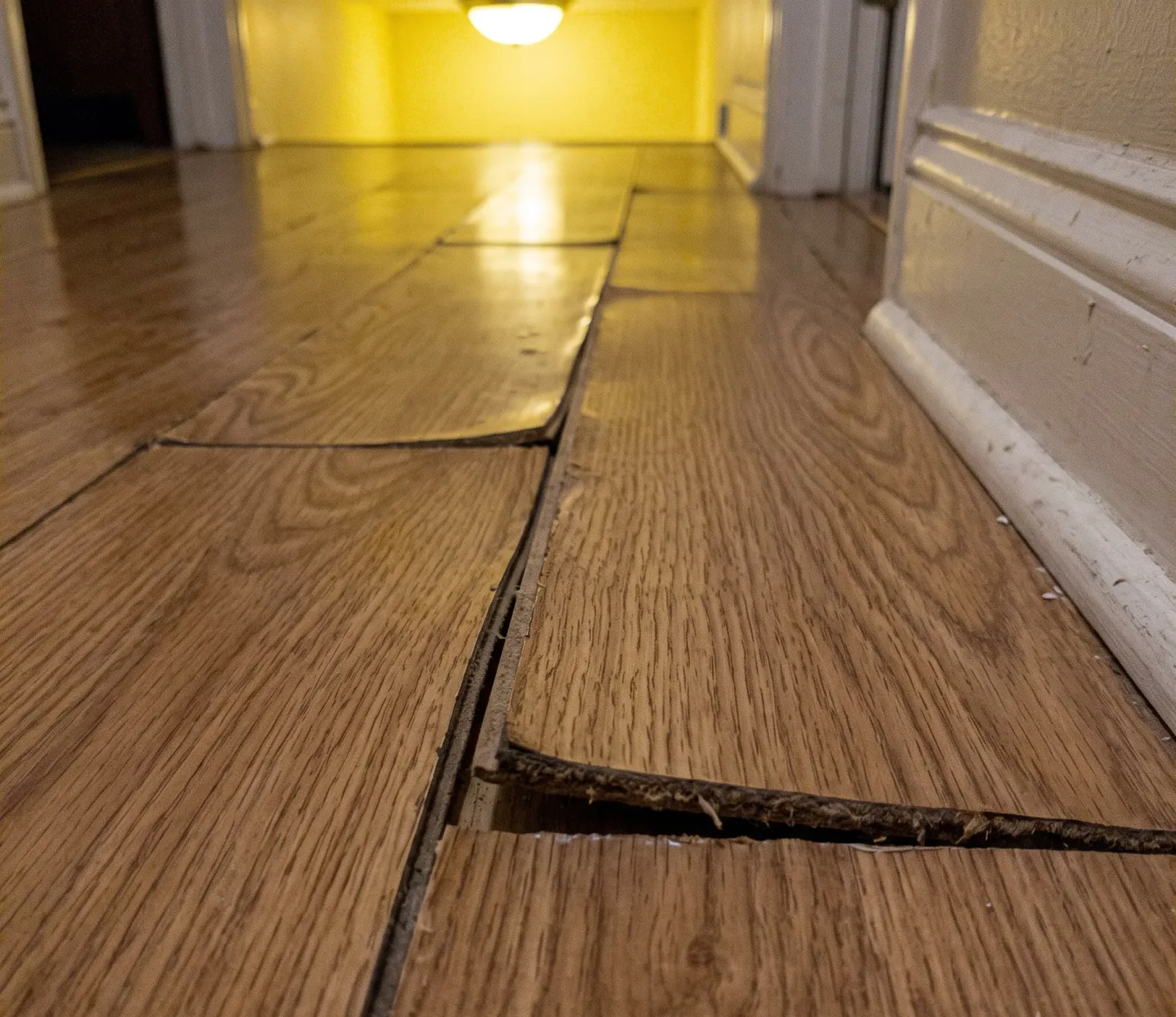
Filing a Water Damage Insurance Claim in Atlanta, GA
What Atlanta homeowners policies usually cover, and the paperwork that decides whether your claim gets paid.
In Georgia, a standard homeowners policy covers sudden water damage like a burst pipe, but not gradual leaks or outside flooding. Document everything, notify your insurer promptly, and get an itemized estimate before repairs start — a public adjuster can help if the claim is disputed.
Documenting the Loss Before Cleanup
Water damage in an Atlanta home usually starts with a phone call, not a form. A burst supply line under a sink, a failed water heater in a Grant Park bungalow, or a ceiling stain after a storm each set the same clock running. What happens in the first hours and days determines whether an insurer pays fairly or fights the claim. This page walks through documenting the loss, understanding what a homeowners policy in Georgia typically covers, and what to expect once an adjuster gets involved.
Notice of loss is the first formal step: telling the insurance company a loss occurred, ideally the same day it's discovered. Most policies require this within a reasonable time, and delay gives an adjuster room to question the claim later. A phone call starts the file, but a written notice through the insurer's app or portal creates a timestamp. Atlanta homeowners in older neighborhoods like Candler Park or Virginia-Highland, where plumbing is original to a 1920s build, should not wait to see if a leak stops on its own before reporting it.
Mitigation duty sits right alongside notice of loss. Nearly every homeowners policy requires the insured to take reasonable steps to prevent further damage, shutting off the water source, moving furniture, running fans, once it's safe to do so. Failing to mitigate can give an insurer grounds to deny the portion of damage that resulted from inaction rather than the original event. This does not mean hiring a full remediation crew before anyone from the insurance side has looked at anything, but it does mean not letting standing water sit for days in a Decatur basement.
Filing the Notice of Loss
Documentation built before repairs begin is what an adjuster actually works from, so the standard is simple: photograph and video everything before it's touched, moved, or removed. Wide shots of each affected room, close-ups of damaged flooring, drywall, or baseboards, and dated photos of any wet materials. A written inventory of damaged personal property, with approximate purchase dates and values, matters just as much as the structural photos. In an Atlanta rowhouse or a Buckhead condo alike, the claim is only as strong as the record made before cleanup starts.
Keep every receipt tied to the loss, from a hardware-store fan rental to a hotel stay if the home in Morningside or Ormewood Park is briefly unlivable. These become part of the proof of loss, the sworn statement of what was damaged and what it's worth, which most policies require the homeowner to submit within a set window after the loss. An itemized estimate, whether from a contractor or generated through estimating software like Xactimate, gives the adjuster a line-by-line basis to compare against their own scope of work rather than a lump-sum guess.
- Photograph every affected room before anything is moved or dried. Wide shots of each space plus close-ups of baseboards, flooring and furniture legs give the adjuster a clear before-picture and support the proof of loss you will file later in Atlanta or wherever the property sits.
- Write down the date and suspected cause the moment you notice water — a burst supply line, an overflowing appliance, a roof leak after a storm. Insurers ask for this on the notice of loss, and a vague memory weeks later invites a denial or a lowball offer.
- Keep every receipt tied to the loss: emergency plumbing, a hotel stay, moisture meters, dehumidifier rental. These belong in the supplemental claim and are easy to forget once the immediate crisis around your Atlanta home has passed and life returns to normal.
- List damaged personal property room by room with approximate purchase dates and values. This becomes the backbone of your itemized estimate and helps your adjuster distinguish actual cash value from replacement cost value when the policy language gets read closely.
- Do not throw out damaged materials until the adjuster has seen them or told you it's fine to discard. Georgia insurers can request to inspect original flooring, drywall or cabinetry, and disposing of it early can complicate an otherwise straightforward claim.
- Save any text messages, emails or notes from calls with your insurance company. If a claim stalls or heads toward a denial, this record shows what you were told and when, which matters if you ever need to invoke the appraisal clause.
What the Adjuster's Visit Covers
A standard Georgia homeowners policy, the HO-3 form used by most insurers, covers water damage that is sudden and accidental: a pipe that bursts without warning, a washing machine hose that fails, a water heater tank that ruptures. It does not cover flooding from outside the home, meaning rainwater or runoff that enters at ground level rather than through a broken fixture, and it does not cover gradual leaks that were allowed to seep for weeks or months before discovery. Insurers treat a slow leak as a maintenance failure, not a sudden loss, and that distinction decides a large share of Atlanta claims.
A standard homeowners policy usually pays for a burst pipe or a sudden appliance failure but draws a hard line at rising water from outside the home and at damage the adjuster can trace to a slow leak that went unnoticed for months. Flood itself is a separate policy, sold through the NFIP or a private carrier, so a homeowner near Proctor Creek or the South River who assumes the standard policy already covers overflow is often finding that out for the first time during a denial.
- A standard Georgia homeowners policy typically pays for sudden, accidental water discharge — a burst pipe or a washing machine hose that fails without warning — but a slow leak behind a wall for months is usually treated as a maintenance issue and excluded.
- Flooding from outside the home, including heavy rain runoff pooling against a foundation near Peachtree Creek or any other Atlanta waterway, is excluded from a standard policy. That coverage only exists through a separate flood policy, most often through the NFIP.
- Sewer and drain backup, including water forced back through a floor drain during a heavy storm, is usually excluded unless you purchased a specific water-backup endorsement. Check your declarations page for this add-on before assuming a backup claim will be paid.
- Mold that develops after a covered water loss is often covered up to a policy sublimit, but mold from a long-neglected leak may not be. Georgia has no state licensing requirement for mold remediation, so ask directly what documentation your insurer wants for clearance.
Actual Cash Value vs Replacement Cost
Every policy draws a line between actual cash value and replacement cost value, and it shapes what a payout actually covers. Actual cash value pays what the damaged material was worth accounting for age and wear, a fifteen-year-old hardwood floor paid out at its depreciated value rather than what new flooring costs today. Replacement cost value pays what it actually costs to replace the material new, sometimes with a portion held back until the work is done and proof submitted. Reading which basis a policy uses, before a loss happens, changes what a homeowner should expect at settlement.
A sewer or drain backup, water forced up through a floor drain or a failed sump pump, sits outside a base policy unless an endorsement for water backup was added beforehand. Homes near Intrenchment Creek or in older sections tied to combined sewer lines see this scenario more than most, and it catches people off guard because the water entering the house looks identical to a plumbing failure. Check the declarations page for that endorsement before assuming the loss is covered at all.
| Coverage Item | Typically Covered | Typically Excluded |
|---|---|---|
| What it pays | Depreciated value at loss | Cost to replace new |
| First check amount | Full ACV amount upfront | ACV portion, then holdback |
| Second check | None due | Depreciation released after receipts |
| Best for | Older flooring, cabinets, drywall | Recent renovations, newer finishes |
| Missed items | Depreciation you may never recover | Deadline to finish repairs and submit receipts |
When a Claim Gets Denied or Disputed
An adjuster's job is to inspect the loss, apply the policy language, and produce a scope of work and settlement figure. That does not make the adjuster's number the final word. A homeowner can request the adjuster's full itemized estimate, compare it against an independent contractor estimate, and push back in writing on any missing line items, whether that's a mismatched Xactimate price for drywall replacement in a Reynoldstown home or a skipped detail like flooring transition strips. Disagreement at this stage is normal, not a sign the claim is failing.
If the gap between the insurer's number and the actual cost of repair can't be resolved through discussion, most policies include an appraisal clause: each side picks an appraiser, the two appraisers pick an umpire if they disagree, and the umpire's decision on the amount of loss becomes binding. This is a narrower tool than a lawsuit and faster to use. Georgia also gives homeowners a longer runway than many states expect, up to six years to bring a breach-of-contract claim against an insurer over a denied or underpaid loss.
Working With a Public Adjuster
A denial is not always the end of a claim. Many denials are reversible with a supplemental claim, additional documentation or a corrected scope submitted after damage not visible during the first inspection turns up, hidden moisture behind a wall in an older home near Emory University, for example, found only once drywall comes down. A public adjuster, licensed in Georgia like any other class of adjuster, can be hired to build and negotiate that supplemental claim on the homeowner's behalf, typically for a percentage of the settlement, capped under Georgia regulation at up to 33 percent.
Georgia law also gives homeowners a specific pressure point for a claim handled in bad faith: a written demand for payment followed by 60 days of continued refusal can open the door to a bad-faith action against the insurer, separate from the underlying claim itself. This does not apply to a claim that's simply being reviewed or investigated within a reasonable timeframe. It applies to a claim where the insurer has clearly refused payment on a covered loss and continues to refuse after being formally put on notice.
What A Proof Of Loss Needs
- Georgia's insurance commissioner permits public adjusters to charge as much as 33 percent of a settlement, per the office's own consumer bulletin. Homeowners in Ansley Park, Grant Park, or Virginia-Highland weighing that option should compare it against simply working the claim themselves with an itemized estimate and a documented proof of loss.
- A Georgia OCI consumer bulletin states a public adjuster may charge up to 33 percent of your claim settlement. Some public adjusters charge less in practice, but 33 percent is the ceiling the state's own bulletin names as allowed.
- Under O.C.G.A. § 33-4-6, an insured can send a written demand, and if the insurer refuses payment for 60 days without a reasonable basis, that refusal can support a bad-faith claim, separate from the underlying dispute over the loss itself.
- The statute of limitations for a breach of an insurance contract claim in Georgia is six years under O.C.G.A. § 9-3-24, but do not wait — most policies require far faster notice of loss than that outer legal limit.
- A wet drywall or carpet pad left standing can turn into a mold problem within about two days at ordinary indoor temperatures, which is why the scope of work an adjuster approves usually hinges on how fast drying equipment gets on site, not just on the size of the loss.
- Georgia's Unfair Claims Settlement Practices Act, at Ga. Code Ann. §§ 33-6-30 to 33-6-37, sets conduct standards for how insurers handle claims, though it does not fix a specific number of days for an insurer to acknowledge a new claim.
Frequently Asked Questions
What does my homeowners policy actually cover here?
Atlanta homeowners near Proctor Creek and the Vine City area, where flooding has repeated for decades, sometimes assume city buyout or mitigation funding replaces insurance. It does not. Any claim for that water still runs through the homeowner's own policy, and if the loss came from rising water rather than a pipe or appliance, a standard HO-3 policy will not pay it without separate flood coverage already in place before the loss happened.
What's the deadline to submit my proof of loss in Georgia?
Photograph and video every damaged area before cleanup, write down the date and cause, and send written notice of loss to your insurer as soon as possible. Keep receipts for any emergency mitigation, like a plumber call or a wet-vac rental, since Atlanta insurers will ask for these when the claim is reviewed.
What if the adjuster's estimate seems too low?
A standard homeowners policy usually covers a burst pipe or sudden appliance failure but excludes flooding from outside the home and gradual leaks that built up over time. If your Atlanta property sits near a creek like Nancy Creek or Proctor Creek, ask specifically whether you carry separate flood coverage, since that is never automatic.
Do I need a public adjuster or just my insurer's?
You can request an itemized estimate directly from the adjuster and compare it against your own contractor's scope of work. If the gap is significant, most Georgia policies include an appraisal clause allowing each side to name an appraiser, which can resolve a disputed number without going to court.
Does Georgia license public adjusters and cap their fee?
Yes. Georgia requires anyone acting as a public adjuster to be licensed through the state, and a consumer bulletin from the Office of Commissioner of Insurance and Safety Fire caps their fee at up to 33 percent of the settlement. Ask for the license number and get the fee agreement in writing before signing anything.
Ready To Start Your Claim?
Document every room before cleanup starts, then have the licensed pros we connect you with review your estimate against the insurer's scope of work.
Call (404) 496-7950