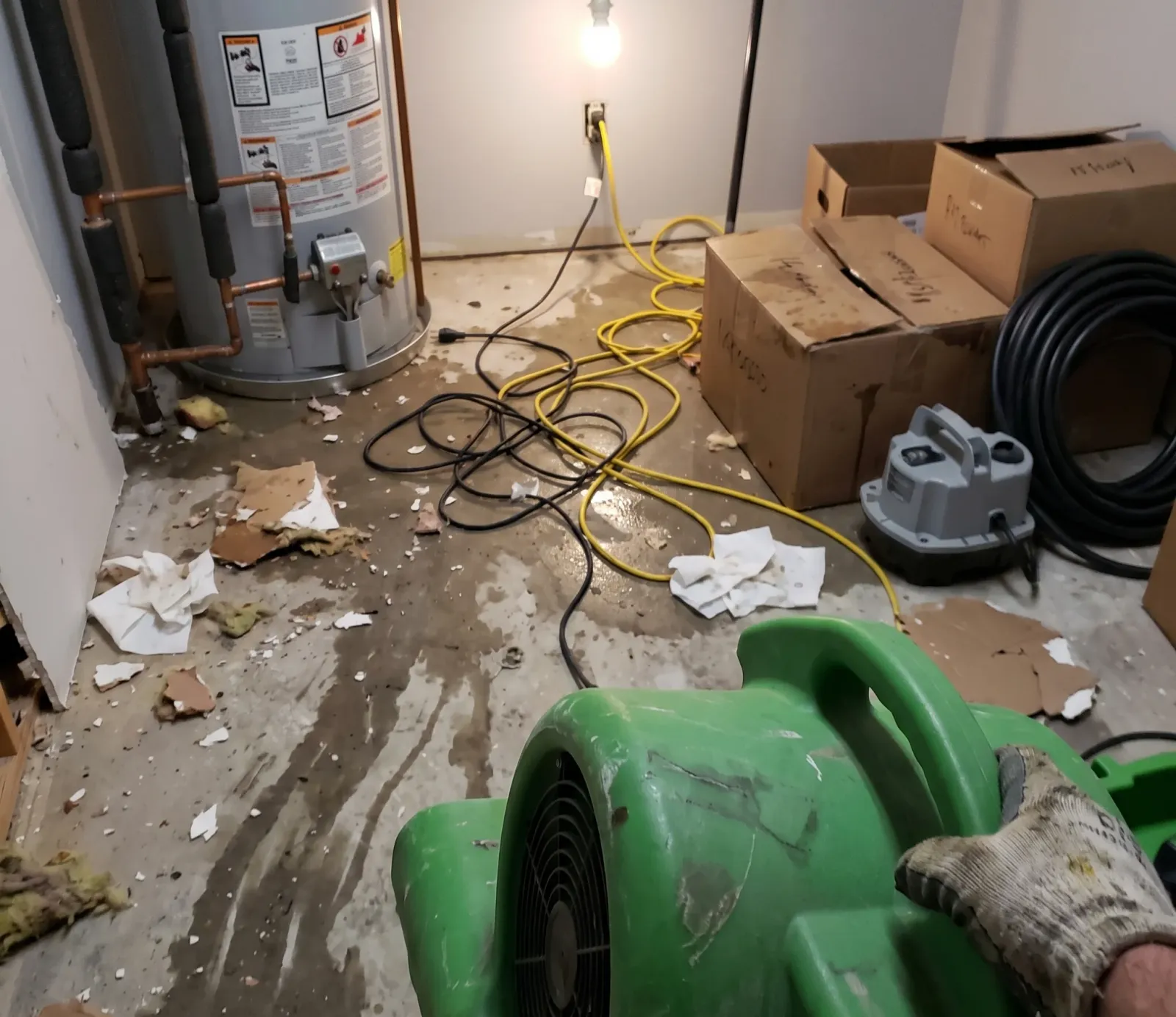
Category 1, 2, and 3 Water Damage in Atlanta Homes
What Category 1, 2, and 3 water mean, and why the label changes the entire cleanup approach.
S500 sorts water losses into three categories by contamination level: Category 1 is clean source water, Category 2 (gray water) carries some contaminants, and Category 3 (black water) is grossly contaminated, including sewage. Category determines the cleanup method Atlanta homes need, not the amount of water.
Why This Label Matters First
Every water loss in Atlanta gets sorted into one of three categories before any drying begins, and that sorting decides almost everything downstream: which materials get saved, which get cut out, and what the final bill looks like. The IICRC S500 standard is the reference document behind this system, and it exists precisely because water is not just water once it leaves a pipe or a roofline. A supply line failure in a Morningside kitchen and a backup in a Peoplestown basement are not treated the same way, and the category is why.
Category 1 is clean water at the source: a burst supply line, an overflowing sink, a failed water heater. It carries no meaningful contamination and, if caught fast, can often be dried in place rather than removed. Category 2 is gray water — water that has picked up some contamination, from a washing machine discharge line or an aquarium, or a Category 1 loss that has sat too long. Category 3 is grossly contaminated: sewage backups, groundwater intrusion, or flooding from a river or creek.
Reclassification matters because water rarely stays in its starting category. A clean supply line failure in a Morningside kitchen can sit against drywall and flooring long enough that bacterial growth begins, and the IICRC S500 framework expects a technician to reassess condition, not just source, before choosing a cleanup method. Time and temperature both push a loss toward the dirtier category. That is why a crew evaluating a home near Peachtree Creek or Nancy Creek checks how long water sat and what it touched, not only where it came from.
Category 1: Clean Water
Category 1 water is the most forgiving to work with and the cheapest to resolve. Because there's no pathogen load, porous materials like drywall, carpet pad, and baseboards can often be dried and kept rather than discarded, provided the drying starts quickly and equipment reaches the right conditions. The S500 standard treats time and temperature as the two variables that matter most here — a fast response with proper airflow and dehumidification can save materials that would otherwise need to be replaced.
Category 2 changes the calculus. Gray water carries enough contamination that antimicrobial treatment becomes part of the standard cleanup method, and some porous materials that would survive a Category 1 loss get removed instead of dried, particularly carpet pad and anything already showing wear. A dishwasher leak in a Kirkwood kitchen and a washing machine overflow in a Chamblee laundry room both fall here, and both call for more caution than a clean supply line break, even though nothing looks dramatically different to the eye.
- Category 1 is water from a clean source that has not touched contaminants: a supply line, a water heater, or rainfall intrusion caught immediately. It poses little health risk if addressed quickly, which is why the classification matters as much as the volume of water involved.
- Category 2, gray water, contains a measurable level of contamination, from sources like washing machine discharge, dishwasher overflow, or aquarium water. It won't necessarily contain pathogens at the level of sewage, but it carries enough organic material that porous materials often can't simply be dried and kept.
- Category 3, black water, is grossly contaminated and is presumed to carry pathogens. Sewage backups, water that has passed through a combined sewer overflow event, and river or creek floodwater all fall here, regardless of how clear the water looks once it reaches a floor.
- The category assigned at the start of a job determines which materials can be dried and kept versus which must be removed. This is not a judgment call left to preference; it follows the S500 standard's own material and contamination guidelines.
- Category also drives protective equipment and containment decisions. Category 1 work needs basic precautions; Category 3 work requires the kind of containment and personal protection used on any contamination job, because the assumption of pathogens doesn't get relaxed based on appearance.
- Cost follows directly from category because Category 3 and reclassified Category 2 losses require more material removal, more disposal, and more antimicrobial treatment than a Category 1 job caught early, where drying in place is often enough.
Category 2: Gray Water
Category 3 is where the cleanup method changes completely, and it is also where this page stops — the actual remediation of sewage and grossly contaminated water losses is its own service, not something to summarize here. What belongs on this page is the classification itself: why a combined sewer overflow event in an older intown Atlanta neighborhood, or a creek overflow near a low-lying area, gets treated as Category 3 rather than a lesser category just because the source is stormwater-adjacent.
Some of Atlanta's older core, particularly intown pre-war areas, is served by combined sewer infrastructure, where stormwater and sanitary sewage share the same pipe. During a heavy rain event, that combined flow can back up through a floor drain or low fixture into a basement, and that water is Category 3 by definition, not by degree. The same is true for water entering a home directly from a flooded creek. The source determines the category, and the category is what a homeowner should ask about first, before anything else.
- Time and temperature are the two variables S500 uses to decide whether water that started clean has to be reclassified. A slow leak sitting under a cabinet for a week is judged differently than the same water caught within hours.
- Reclassification can move a loss upward mid-job: clean water sitting for days, or clean water crossing contaminated flooring or wall cavities, is treated as gray or black water from that point forward, not the category it started as.
- Once reclassification happens, the cleanup method changes with it. Materials that could have been dried and saved under a Category 1 assumption may need to be removed once the same water is treated as Category 2 or worse.
- This is also why a same-day response matters more than the category label itself. Water that would have stayed Category 1 if addressed promptly can reclassify simply because nobody was there to stop the clock.
The Three Categories Side By Side
Reclassification is a real part of the S500 system, not an edge case. A Category 1 loss that sits unaddressed for more than 24 to 48 hours can be reclassified to Category 2, because time itself becomes a contamination factor — clean water sitting in contact with building materials starts breaking them down and creating conditions pathogens can use. This is one of the more practical reasons a fast response matters more than people assume when they're deciding whether a leak is worth calling about right away.
Atlanta's summer humidity makes this timeline tighter than it would be in a drier climate. High dew points mean indoor air is already carrying a lot of moisture for much of the year, so a wet space that isn't actively drying doesn't get much help from ambient air the way it might in a low-humidity region. That's a factor in category decisions as much as a mold-prevention one, since a Category 1 loss that reclassifies to Category 2 because of delay is a direct result of time and temperature working against the material rather than for it.
| Category | Source | Cleanup Method |
|---|---|---|
| Source examples | Supply lines, appliance overflow | Dishwasher, washing machine, aquarium |
| Contamination level | None at origin | Some pathogens, chemical residue |
| Porous material rule | Often dried in place | Case by case, time dependent |
| Antimicrobial treatment | Usually not required | Commonly applied |
| Typical reclassification risk | Rises with time and heat | Already elevated at start |
How Time and Heat Reclassify a Loss
The category also drives cost, which is often the part a homeowner actually wants explained. A Category 1 loss in a Virginia-Highland home that gets dried within the first day can, in many cases, avoid material replacement almost entirely — the cost is equipment and labor for drying, not demolition. A Category 2 loss adds antimicrobial treatment and some material removal to that same bill. A Category 3 loss requires the contaminated materials to come out, which is a different scope of work and a different category of service altogether.
This is why an inspection happens before a quote means anything. Two losses that look similar on the surface — water on a basement floor in Grant Park, water on a basement floor near Adair Park — can be entirely different categories depending on where that water actually came from. The licensed pros a homeowner gets connected with will test and trace the source before assigning a category, because guessing from appearance alone is exactly how a Category 2 loss gets treated, and priced, as if it were Category 1.
What This Means for Atlanta Homes
None of this classification work is optional or cosmetic. Insurance claims reference the category, remediation scope depends on it, and the difference between saving a floor and replacing one often comes down to which category the water was assigned and how quickly that assignment happened after the loss. A homeowner who understands the three categories going into an inspection is better positioned to ask the right questions and understand why the estimate looks the way it does.
The practical takeaway for anyone dealing with water in an Atlanta home, whether it's a supply line in Buckhead or a storm-driven backup near Peoplestown, is that the source of the water matters more than how the water looks or how much of it there is. Category 1, 2, and 3 aren't marketing terms — they're the S500 framework's way of describing contamination risk, and that risk is what determines whether materials get dried, treated, or removed.
Water Category At A Glance
- Category 1 means clean water, like a supply line break. Category 2, gray water, carries some contamination — think a washing machine overflow. Category 3, black water, is grossly contaminated, from sources like sewage backup common in older Atlanta homes near combined sewer lines. Time and temperature can reclassify clean water to gray if it sits too long.
- Category 2 gray water carries enough contamination, from a washing machine discharge or an overflowing toilet with no solid waste, to cause illness if a person is exposed.
- Category 3 black water includes sewage backups and any water that has picked up pathogens from soil, floodwater, or waste, and is treated as grossly contaminated under the S500 standard.
- Porous materials such as carpet pad, drywall, and insulation that absorb category 2 or 3 water are frequently removed rather than dried, since cleaning contamination out of the material fully is often impractical.
- A loss that sits unaddressed climbs the category scale on its own. Warm, humid stretches typical of an Atlanta summer speed that shift, so the S500's cleanup method for a claim opened on day one can differ sharply from the same claim reopened on day four.
- An antimicrobial application is a step within the cleanup method, not a substitute for it — it supports drying and cleaning rather than replacing the need to remove or disinfect contaminated material.
Frequently Asked Questions
What do Category 1, 2 and 3 actually mean?
Category 1 starts from a clean source like a supply line. Category 2 carries enough dissolved contaminants, from a source such as a dishwasher discharge, that porous materials usually need removal rather than just drying. Category 3 involves gross contamination, including sewage backing up through a low fixture, which happens near Atlanta's older combined sewer sections during heavy storms. The category a technician assigns in a Grant Park or Kirkwood home decides whether flooring is saved or torn out.
Is my loss automatically Category 1 if a supply line broke?
Not automatically, and not on your own guess. A supply line break is Category 1 the moment it happens, but the same water sitting for days, or sitting against a foundation with Atlanta's clay soil, can pick up contaminants and reclassify to Category 2. The IICRC's time-and-temperature rule governs that shift, not how the water looked at first.
What makes gray water different from clean water?
Gray water carries enough contamination — soaps, food residue, or wastewater from a washing machine or dishwasher — that porous materials touching it are treated differently than with clean water. In an Atlanta home, drywall or carpet pad exposed to Category 2 water is often removed rather than dried in place, because drying alone can't guarantee the contamination is gone.
What counts as Category 3 black water?
Sewage backup, water that has passed through Atlanta's combined or aging sewer lines, or flooding from a creek are all treated as Category 3 black water under S500. That classification means pathogens are assumed present, and porous materials like drywall, insulation, and carpet that absorbed it are generally not salvageable.
Does S500 reclassify a loss on time as well as source?
Yes. S500 requires reclassification based on time and temperature, not just source. Clean water left standing in a warm Atlanta home for more than 48 hours, especially in summer humidity, is treated as though it has degraded toward Category 2, because bacterial growth and material breakdown follow a predictable timeline once water sits.
Not Sure Which Category You Have?
Not sure what category your water loss falls under? Describe what happened and get a straight answer on cleanup method.
Call (404) 496-7950