A house rarely announces water damage the day it happens. In Atlanta homes, especially older ones near Virginia-Highland or Grant Park, the first evidence tends to show up weeks later, in places nobody thinks to check. Paint lifts a little at a seam, a baseboard stops sitting flush, a room smells slightly off after it rains. None of that looks urgent on its own. Read together, these small changes are usually the house telling you that water got somewhere it shouldn't have, and has been sitting there since.
Paint And Wall Surfaces
Hidden water damage in an Atlanta home rarely announces itself with a puddle. It shows up as paint that starts peeling along a baseboard, a water stain spreading across a ceiling corner, or bubbling drywall near a window that never had a visible leak. In older intown housing stock and in newer slab-on-grade construction alike, the plumbing and roofing run behind finished surfaces, so the first evidence is almost always cosmetic. A warped baseboard, a patch of discoloration, or a musty smell that returns after cleaning are the clues worth stopping for before the damage spreads further behind the wall.
Baseboards And Trim
Warped baseboards are easy to miss because they sit low, at floor level, where nobody looks closely. Wood trim that has taken on moisture from a wet subfloor or a slow leak inside the wall will cup, separate from the wall, or develop a slightly wavy edge along its top. In older homes around Kirkwood or Ormewood Park, where original trim is common, warped baseboards along one wall only, rather than the whole room, usually points to a specific source nearby rather than general humidity.
Floors That Move Underfoot
A buckling floor is one of the more obvious signs, but it is often dismissed as normal settling for a while before anyone connects it to water. Hardwood that has absorbed moisture from below will cup or ridge, and a soft spot underfoot in a hallway or near a kitchen sink usually means the subfloor itself has softened. This shows up often in homes with original hardwood set directly over a crawl space, where a damp crawl space below can affect the floor without any sign of a leak from above.
Ceilings And Drywall
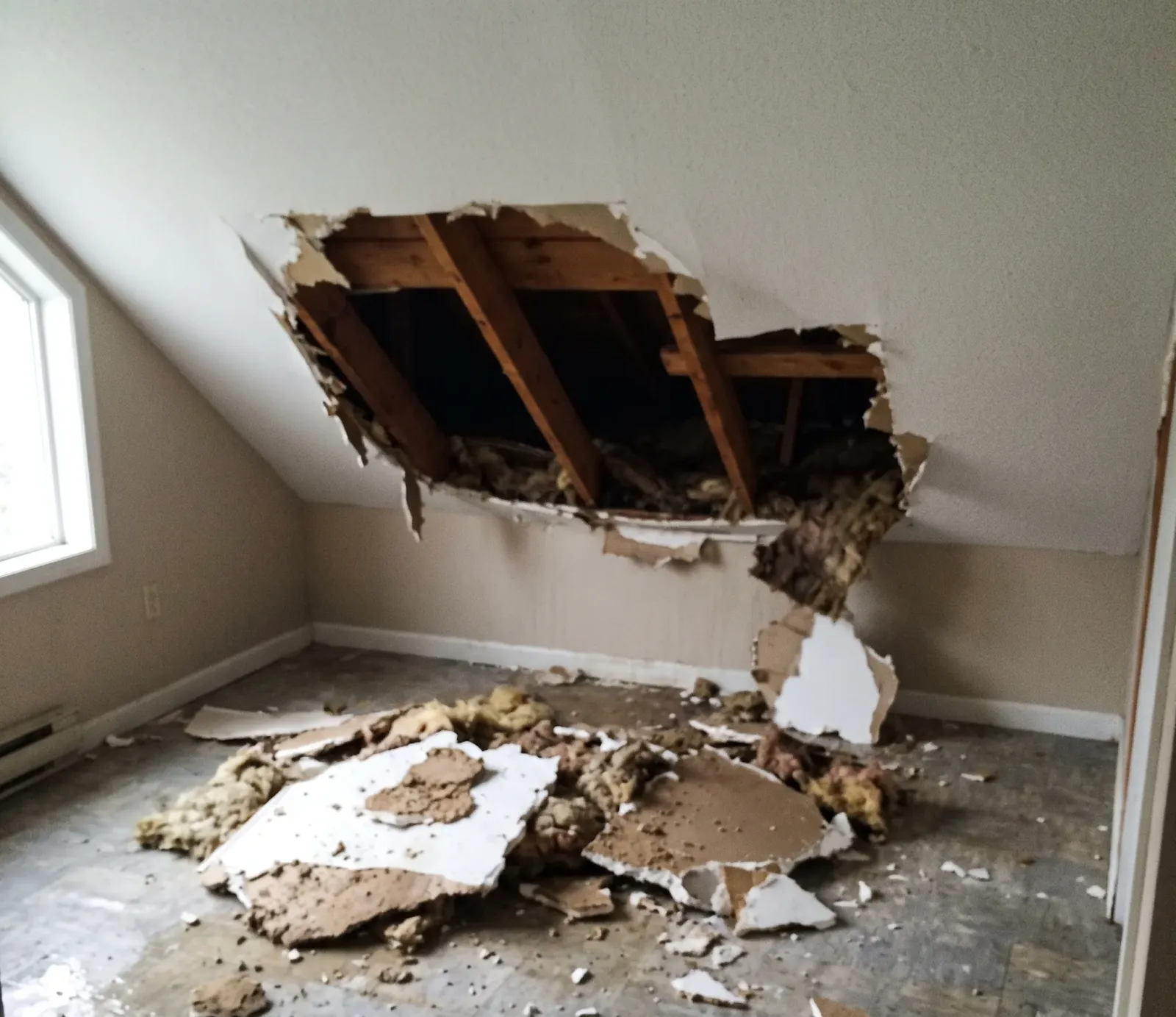
A sagging ceiling is a later-stage sign, but bubbling drywall usually comes first and is worth catching before it gets that far. Drywall that has absorbed water loses its rigidity and starts to bow slightly, sometimes with a faint texture change you can feel more than see. In homes near Druid Hills or Morningside with an attic air handler overhead, a slow condensate leak can show up this way on a ceiling with no obvious source directly above it, since the leak point and the visible damage aren't always in the same spot.
What A Water Stain Tells You
Not every water stain means the same thing, but the shape usually says something. A ring-shaped stain with a darker outer edge, sometimes called a tide line, suggests water sat and slowly evaporated rather than passing through quickly. A stain that keeps returning after painting over it means the source is still active. Color matters too: a rust-colored stain often points to a metal pipe or fastener corroding nearby, while a duller gray-brown stain is more consistent with general moisture intrusion.
Basement Walls And Efflorescence
Basement walls carry their own set of signs, and efflorescence is the clearest one. That white, chalky residue on concrete or block is mineral deposit left behind after water has moved through the wall and evaporated at the surface. It doesn't mean water is actively coming through right now, but it confirms it has happened before and likely will again. Atlanta's clay soil holds water against a foundation wall longer than sandier soil would, which is part of why basement efflorescence shows up as often as it does locally.
Metal Fixtures And Rust
A rust stain on a wall, ceiling, or around a fixture usually means a metal component nearby, a pipe fitting, a nail, a duct strap, has been wet long enough to start corroding. This is worth noting because rust takes time to develop; it isn't something that appears after a single afternoon of moisture. If you see a rust stain paired with any softness in the surrounding drywall or trim, that combination is a stronger signal than either one alone, and it's usually worth tracing back to its source.
The Smell Before The Sight
Flooring tells its own version of the story. A buckling floor or a soft spot underfoot in a room with no obvious spill usually means moisture has been working from below or from a slow leak nearby for some time. Homes with original hardwood over a crawl space are particularly prone to cupping and warped baseboards when that space stays damp, since wood absorbs ambient moisture as readily as a direct spill. Swollen wood around a doorway, delamination at a seam in engineered flooring, or a rust stain bleeding through a subfloor near a fixture all point the same direction: water has been present longer than anyone noticed.
Crawl Spaces And Attics
Crawl spaces and attics deserve a direct look because they're the two areas of a house nobody walks through regularly. A crawl space with a torn or missing vapor barrier can stay damp for months without anyone noticing, and that dampness travels upward into the floor above it. An attic hides its own risk in the air handler and its condensate line; a clogged line or a failed drain pan can leak into the ceiling and insulation for a long stretch before it ever becomes visible from below.
When To Get A Second Look
Swollen wood is a sign worth checking by hand, not just by eye, since early swelling can be felt before it's visible. Press gently on trim, door casings, or cabinet bases in rooms near plumbing; wood that feels soft, spongy, or slightly thicker than a matching piece elsewhere in the house has likely taken on water. Delamination, where layers of plywood or engineered wood separate visibly, is a later sign of the same problem and usually means the moisture has been present for some time already.
When to Call In a Professional
Basements and lower levels in Atlanta's clay soil carry their own set of signs. Efflorescence, the chalky white residue left on a foundation wall as water evaporates and minerals stay behind, usually means groundwater has been moving through the concrete for a while. A tide line low on a wall, a sagging ceiling in the room below a bathroom, or a soft spot in drywall near a slab joint are worth walking around the whole lower level to check, not just the spot where something first caught your eye. Piedmont clay holds water against a foundation after heavy rain rather than draining it away, which is part of why these signs tend to show up here.
Dealing with this in your home?
A basement near Ormewood Park can sit dry for a year, then take on water the first time a real downpour hits. Atlanta's red clay sheds rain rather than soaking it in, so water piles up against a foundation wall fast, especially on lots that slope toward Intrenchment Creek. This post covers what that pattern actually means for a home.