Atlanta water losses do not dry on a textbook timeline, and the reason usually sits outside the building entirely. Ambient air here carries a heavy moisture load for most of the year, and that outdoor air is what gets pulled indoors to replace whatever moisture equipment removes. When outdoor air is already saturated, there is less room in it to accept more, and the whole drying process slows down regardless of how much equipment is running inside a house near Piedmont Park or a basement in Decatur.
What Relative Humidity Actually Measures
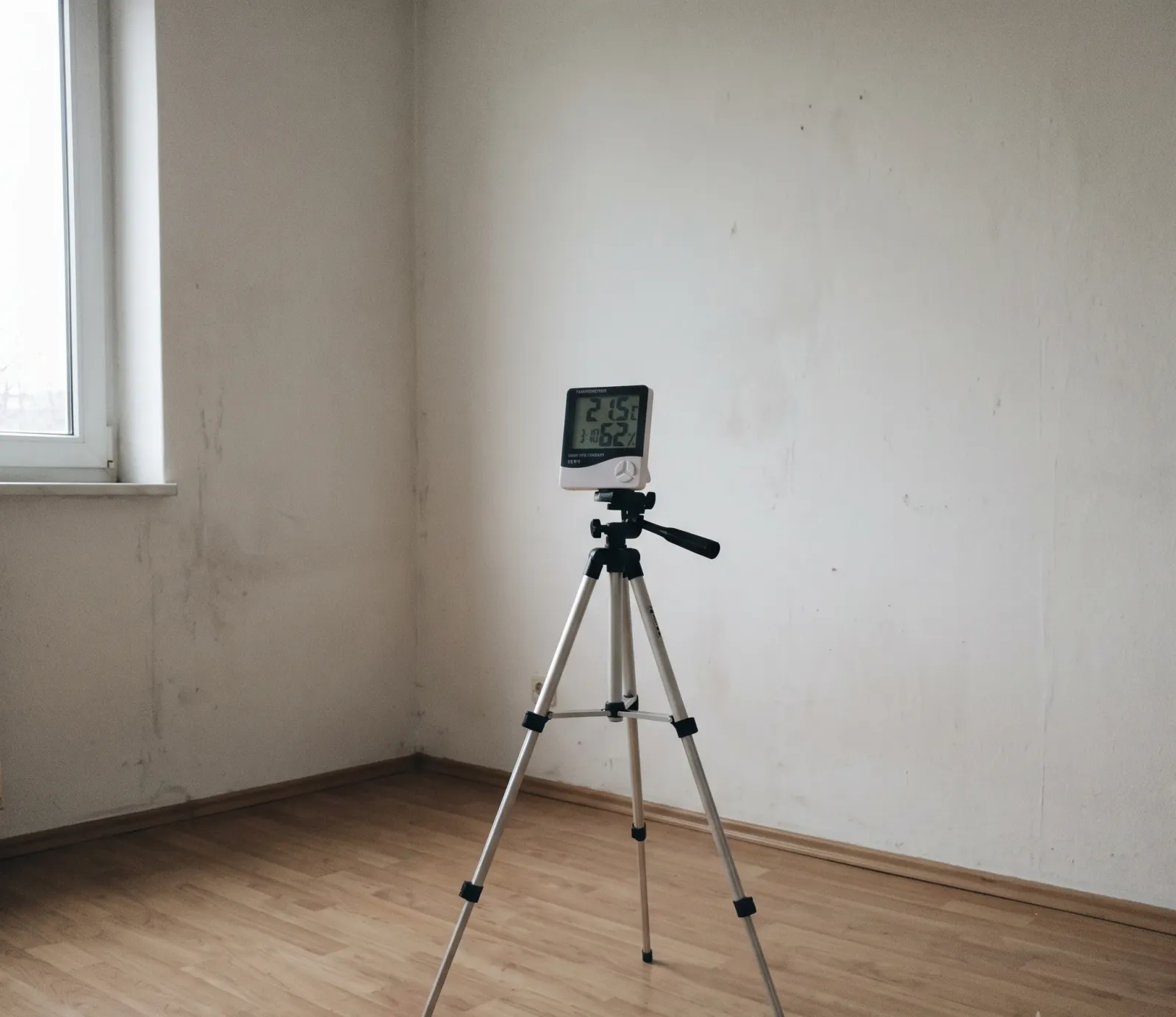
The reason a wet room dries faster in February than in July comes down to how much moisture the outdoor air is already carrying. Relative humidity measures how close the air is to its saturation point at a given temperature, and Atlanta's summer air sits close to that point for weeks at a stretch. Materials release water into ambient air by evaporation, and evaporation slows as the air around them approaches saturation, so the same soaked drywall in Ansley Park behaves differently depending on the month it got wet.
Dew Point Versus Humidity Percentage
Dew point is a better number than relative humidity for judging how hard drying will be, because it does not shift with temperature the way a percentage does. A high dew point means the outdoor air is genuinely loaded with moisture, not just humid-feeling because it is warm. Atlanta's subtropical summer pattern produces dew points that stay elevated overnight as well as during the day, so there is rarely a cool, dry morning window the way there might be in a less humid region.
Vapor Pressure And Evaporation Rate
Evaporation happens because water molecules move from an area of higher vapor pressure, the wet material, toward an area of lower vapor pressure, the surrounding air. When the surrounding air is already carrying a heavy moisture load, that pressure difference shrinks, and evaporation slows down even though the material is still just as wet. This is basic psychrometrics, not a flaw in the equipment, and it explains why a wet subfloor in a Grant Park bungalow can sit at nearly the same moisture reading for days if outdoor conditions do not cooperate.
Why Grain Depression Matters
Drying equipment works by creating grain depression, a gap between the moisture level inside a wet material and the moisture level of the surrounding air, so water has somewhere to go. In a humid climate that gap has to be created mechanically, with dehumidifiers pulling moisture out of the indoor air faster than the humid outdoor air can replace it. Without that constant mechanical push, the indoor climate simply drifts back toward the outdoor moisture load, and the material stops releasing water.
Why Outdoor Air Cannot Help Here
In a dry climate, opening windows or running fans that pull in outdoor air can sometimes speed drying, because that outdoor air is capable of absorbing more moisture than the indoor air already holds. Atlanta rarely offers that option for half the year. Once outdoor humidity climbs into summer ranges, bringing that air indoors adds to the moisture load rather than relieving it, which is why sealed, mechanically dehumidified drying setups matter more here than in places with a genuinely dry season.
Why Equipment Runs Longer Here
The same water loss that might dry in three days in a low-humidity region can reasonably take longer in Atlanta, not because the equipment is different, but because it is fighting a higher moisture load in the ambient air the entire time it runs. Dehumidifiers have to work harder and longer to hold indoor humidity low enough for evaporation to continue. Anyone comparing a drying timeline here to one they read about online should expect the local number to run longer, especially in the humid months.
Crawl Spaces And Persistent Humidity
Grain depression is the working idea behind mechanical drying: air holds moisture measured in grains per pound, and a dehumidifier pulls grains out of the room so the air can accept more from the wet materials again. Outdoor air near Peachtree Creek in August might already carry a grain count close to what indoor air needs to reach before drying stalls, leaving little room for the machine to work with. That gap between outdoor grain count and target indoor grain count is what determines how many hours a unit has to run.
Basements And Indoor Climate Drift
Vapor pressure is the push behind every bit of moisture movement in a structure. Water moves from areas of higher vapor pressure toward lower, whether that's a damp subfloor pushing moisture into a room in Grant Park or humid outdoor air pushing moisture in through a basement wall in a home with a daylight foundation on a sloped lot. When outdoor vapor pressure is high, it works against the direction drying equipment is trying to create, which is part of why the same job takes longer in July than in January.
Why The Mold Clock Still Runs
Dew point is a more useful number than the percentage on a weather app, because it states directly how much water vapor is actually in the air rather than how close it is to saturation at whatever the current temperature happens to be. A summer dew point in the upper 60s or low 70s near Piedmont Park means the ambient air itself is a poor place to dump extra moisture. Psychrometrics is the study of exactly this relationship, and it's why drying plans built for a dry climate don't transfer directly to a humid one.
Reading A Drying Timeline Honestly
Anyone watching moisture meter readings during a slow summer dry-out in Atlanta should expect the numbers to move unevenly, faster on some days than others, tracking outdoor humidity swings as much as anything happening inside the building. A stretch of especially humid days can flatten progress that looked steady the week before. That is normal psychrometrics at work, not a sign that the drying process has failed, and it is worth understanding before assuming equipment is underperforming.
Why Atlanta Air Slows Down Drying
None of this means drying is impossible in a humid month, only that the moisture load has to be managed rather than left to ambient air to absorb. Equipment sized for the space, sealed off from outdoor air exchange, and run long enough to reach a stable indoor climate can still dry a structure near the Chattahoochee River or in Virginia-Highland on a humid week — it just takes a plan built around the actual outdoor air conditions that day, not a generic drying schedule.
Dealing with this in your home?
A basement near Ormewood Park can sit dry for a year, then take on water the first time a real downpour hits. Atlanta's red clay sheds rain rather than soaking it in, so water piles up against a foundation wall fast, especially on lots that slope toward Intrenchment Creek. This post covers what that pattern actually means for a home.