Multifamily & Apartment Complexes
Multifamily Response
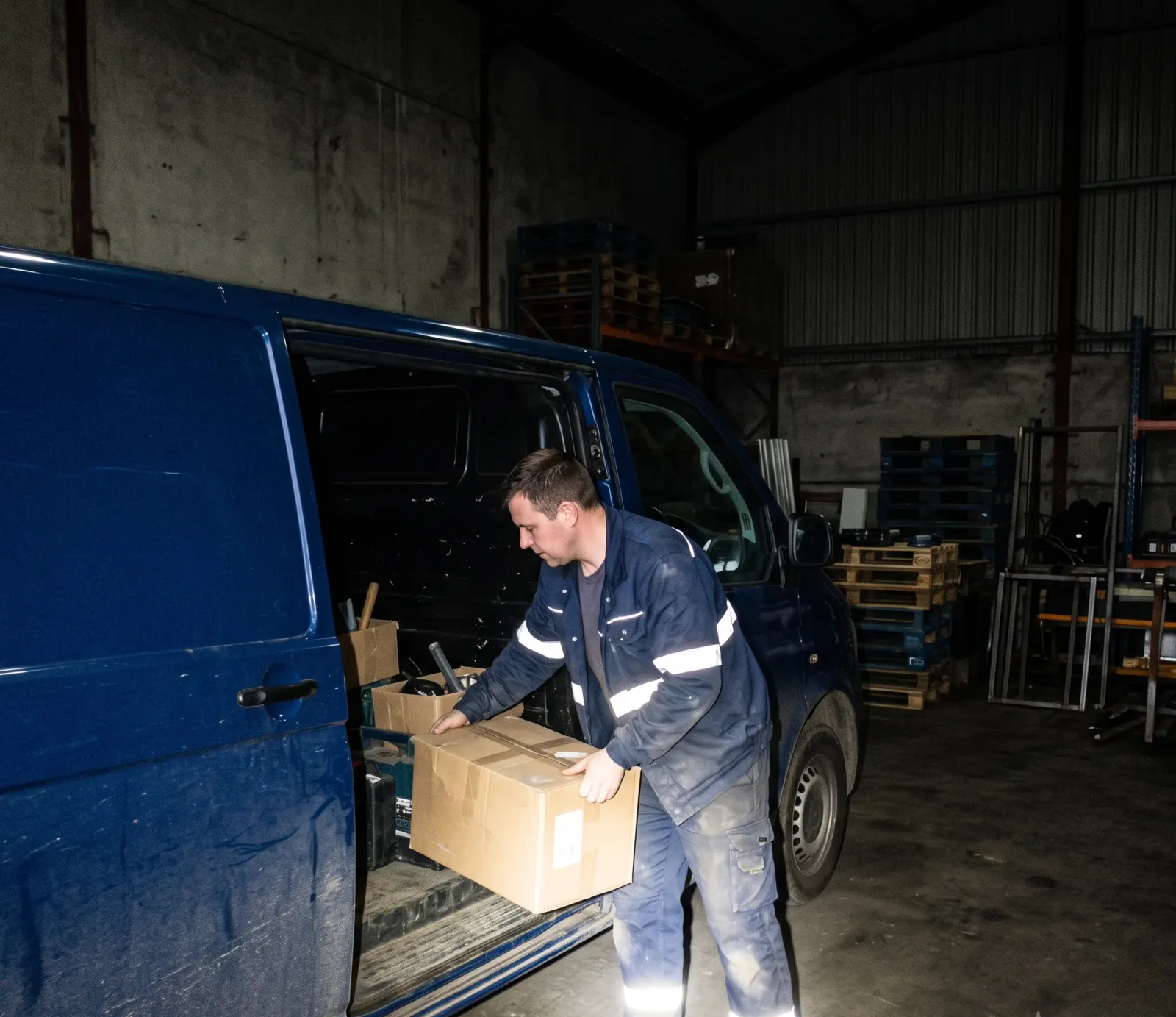
Large-footprint drying for warehouse and industrial buildings, with inventory and racking assessed first.
Warehouse and industrial water damage needs a response built around inventory and racking, not just drying a floor. The licensed pros we connect you with move or elevate stock, assess pallet racking, and dry the concrete slab before equipment downtime turns into product loss.
A warehouse or industrial building in Atlanta carries a different water problem than an office suite. High ceilings and open floor plates mean a leak at a roll-up door or a roof penetration can travel across a concrete floor for a long distance before anyone on the floor notices it, especially on a shift with the lights on bulk storage and nobody walking that aisle. By the time a puddle reaches pallet racking, water has usually already reached product on the lowest shelf.
The concrete slab itself works against a fast discovery. A slab-on-grade warehouse floor hides a slow leak under inventory until a pallet is moved or a forklift operator notices standing water crossing a lane, and by then the water has often traveled well past the point where it entered. Atlanta's older industrial buildings, including the adaptive-reuse loft and warehouse conversions common around West Midtown, add retrofit plumbing and HVAC runs layered onto an original structure not built with them in mind.
Loading dock areas are a recurring entry point. A dock door left cracked during a heavy rain, a clogged dock drain, or runoff pooling against a low-set roll-up door can put water inside a building at the exact spot where product moves in and out. Given Atlanta's clay-heavy soil, water that isn't routed away from a building's perimeter tends to sit against the wall rather than draining down through it, which raises the odds of intrusion at any low opening on that side of the structure.
Downtime is the real cost here, more than the water itself. A distribution operation running on SKU counts and pick schedules can't just wait a few days for a slab to dry before restarting; every day pallet racking sits wet or a section of floor is roped off is a day supply chain commitments slip. Equipment downtime on forklifts and conveyor lines idled by standing water compounds the loss well past whatever the water itself touched.
Inventory loss follows fast in a bulk storage environment. Cardboard cartons wick water upward from a wet floor within hours, and product loss on the bottom two or three levels of racking is common even when the water itself never reaches higher shelves. Shrinkage from a water event gets recorded the same way theft shrinkage does, but it's preventable in a way theft isn't, if the response starts before the water has time to travel and climb.
| Risk Point | Why It Happens | What Matters |
|---|---|---|
| Loading dock and apron | Seal check, dock drainage | Same day |
| Pallet racking base | Structural assessment | 1 to 2 days |
| Bulk storage floor | Slab drying, inventory move | 2 to 4 days |
| Climate-controlled section | Humidity and temperature check | 1 to 3 days |
| High-ceiling open floor | Air movement, dehumidification | 3 to 5 days |
| Roll-up door track | Track and seal repair referral | Slower, budget replacement rate |
| Loading dock exposure | Roll-up doors let rain drive inward | Deploy barriers, dry the apron edge fast |
| Climate-control loss | Humidity swing risks stored product | Restore drying conditions before stock absorbs moisture |
Climate control matters differently in industrial space than in an office. Many warehouses run minimal or zoned climate control across a large volume of air, which means humidity from a water event doesn't get pulled down the way it would in a fully conditioned office suite. Atlanta's summer dew points already push indoor humidity up on their own, and a warehouse with limited air conditioning coverage over a large open area can stay damp for far longer than the wet spot on the floor would suggest.
That matters because of timing. Mold can begin colonizing a wet porous material in roughly 24 to 48 hours indoors, and a warehouse's high ceiling volume and limited climate control give a water event more air to saturate before drying equipment can catch up. A pallet of paper goods or fabric sitting in a humid aisle for two days is a mold risk even if it was never directly wet.
The response has to match the scale of the space, not just the water. Drying a 20,000-square-foot floor plate with high ceilings is a different job than drying a single room, and the goal is getting air moving across the whole affected area fast enough that the ambient humidity doesn't outlast the visible wet patch. The licensed pros we connect you with bring equipment sized to warehouse volumes, not office-sized units asked to do more than they can.
Roof leaks are a common source in older industrial buildings around Atlanta, particularly flat or low-slope roofs over large open spans that see ponding after a heavy rain. A failed membrane or a clogged roof drain can put water onto pallet racking or bulk storage below without any warning at the loading dock, since the entry point is overhead rather than at grade.
Fire suppression systems are another category specific to this kind of building. A sprinkler head that fails, or a system that discharges from age or damage rather than an actual fire, can release a large volume of water across racking and product in a short time. That's a different cleanup than a slow leak: more water, faster, over a wider footprint, and it usually calls for the same triage as any large loss, moving product before the water reaches more of it.
Product loss assessment on a warehouse claim looks different from a household one. An adjuster and the licensed pros we connect you with need to document not just water damage to the building itself but which SKUs and pallet positions were affected, since inventory value on a commercial policy is handled separately from the structure. Photographing racking levels and product condition before anything is moved matters here more than it does almost anywhere else in a water claim.
Equipment on the floor complicates cleanup further. A forklift or conveyor system that's been standing in water needs its own inspection before it goes back into service, and that assessment is separate from drying the concrete floor underneath it. Treating the building and the equipment on it as one job, rather than two, is how a warehouse loss gets fully accounted for instead of leaving a piece of it unresolved.
Speed matters here for a reason that doesn't apply to a small office: the sheer square footage involved. A leak that would be a contained problem in a 1,500-square-foot suite can spread across an entire aisle of bulk storage before it's found, simply because nobody's positioned to see it happen in real time on an open floor plate with high ceilings. Response time before the water travels further is the single biggest variable in how much product and racking end up affected.
A warehouse in West Midtown or along Fulton Industrial Boulevard carries risk a small office never does: pallet racking loaded to a high ceiling, sku counts in the thousands, and a concrete floor that hides how far water has traveled before anyone on the floor notices. Water moving under bulk storage or through a loading dock during heavy rain can soak the base of racking and the bottom layer of product before a forklift operator sees standing water at all. Equipment downtime here means a stalled supply chain, not a slow afternoon, and shrinkage from wet inventory is often discovered pallet by pallet, well after the roll-up door was closed.
West Midtown's converted warehouses raise the stakes further. A former industrial building repurposed for bulk storage often carries an older concrete slab, retrofit plumbing runs added long after the original pour, and roof lines never designed for the racking loads now underneath them. A roof leak over pallet racking near Chattahoochee Avenue does not stay contained to one aisle. It runs along the slab, follows the grade of an old industrial floor, and reaches product several bays away before anyone doing a normal walk-through would notice.
Intown condo conversions around Old Fourth Ward and West Midtown are usually slab-on-grade, while older brick ranches near East Lake often sit on a crawl space. Each responds differently to a leak. The licensed pros we connect you with read the construction type before deciding how a space needs to dry.Lenox 30326, Chastain Park 30327 and Sandy Springs 30328. Wet drywall or carpet left standing in Atlanta's summer humidity does not get a grace period, since damp indoor air keeps materials from drying on their own. Left alone near Peachtree Creek or anywhere else in the city, that dampness sets the stage for a bigger problem within days. Calling early is what actually limits the damage.
A hard freeze is rare in Atlanta, so plumbing in older sections near Candler Park and Druid Hills was never built with much margin for one. When temperatures do drop, burst pipes show up in clusters within days, and the pros we connect homeowners with plan for that seasonal spike rather than treating each call as unrelated.A commercial loss in Atlanta, from a Buford Highway strip retailer to a Perimeter Center office floor, usually carries a wider drying footprint and equipment count than a house. Expect the estimate to separate square footage, dehumidifier count and days running, since that combination drives the total more than the water source itself. pricing guide, and the commercial overview covers how a scheduled program works.
Multifamily Response
Condo & HOA
Hospitality Response
Response speed depends on where the facility sits relative to I-285 and the Fulton Industrial Boulevard corridor, but the goal for a warehouse call is arrival within hours, not a next-day slot. A loading dock flooding during business hours, or a roll-up door failing to seal against wind-driven rain, gets treated as a priority call because product sitting on lower racking is at risk the longer water sits on that concrete floor.
Extraction crews the pros bring in work around an active facility rather than shutting it down. Aisles get cleared in sections so forklift traffic can continue in the parts of the warehouse not affected, and drying equipment is staged along walls and under racking rather than in the main travel lanes. The goal is keeping shipping and receiving moving while the wet section dries, not treating the whole building as one job.
Palletized inventory sitting directly on a wet concrete floor is the first thing addressed, since cardboard wicks moisture upward into a pallet's lower layers within hours. The pros documented on-site log which SKUs and pallet positions were affected before anything is moved, which matters for both the insurance claim and any inventory write-off decision the facility has to make separately.
High-ceiling warehouse space with limited climate control can take longer to dry than a standard commercial room, since there is more air volume for drying equipment to work against and less mechanical dehumidification already running. On a large open floor plate near Fulton Industrial Boulevard or the Southside Industrial Parkway area, expect drying equipment placement to be planned around racking layout rather than a fixed daily estimate.
Call now to get inventory and racking assessed before standing water sits any longer under the pallets.
Call (404) 496-7950