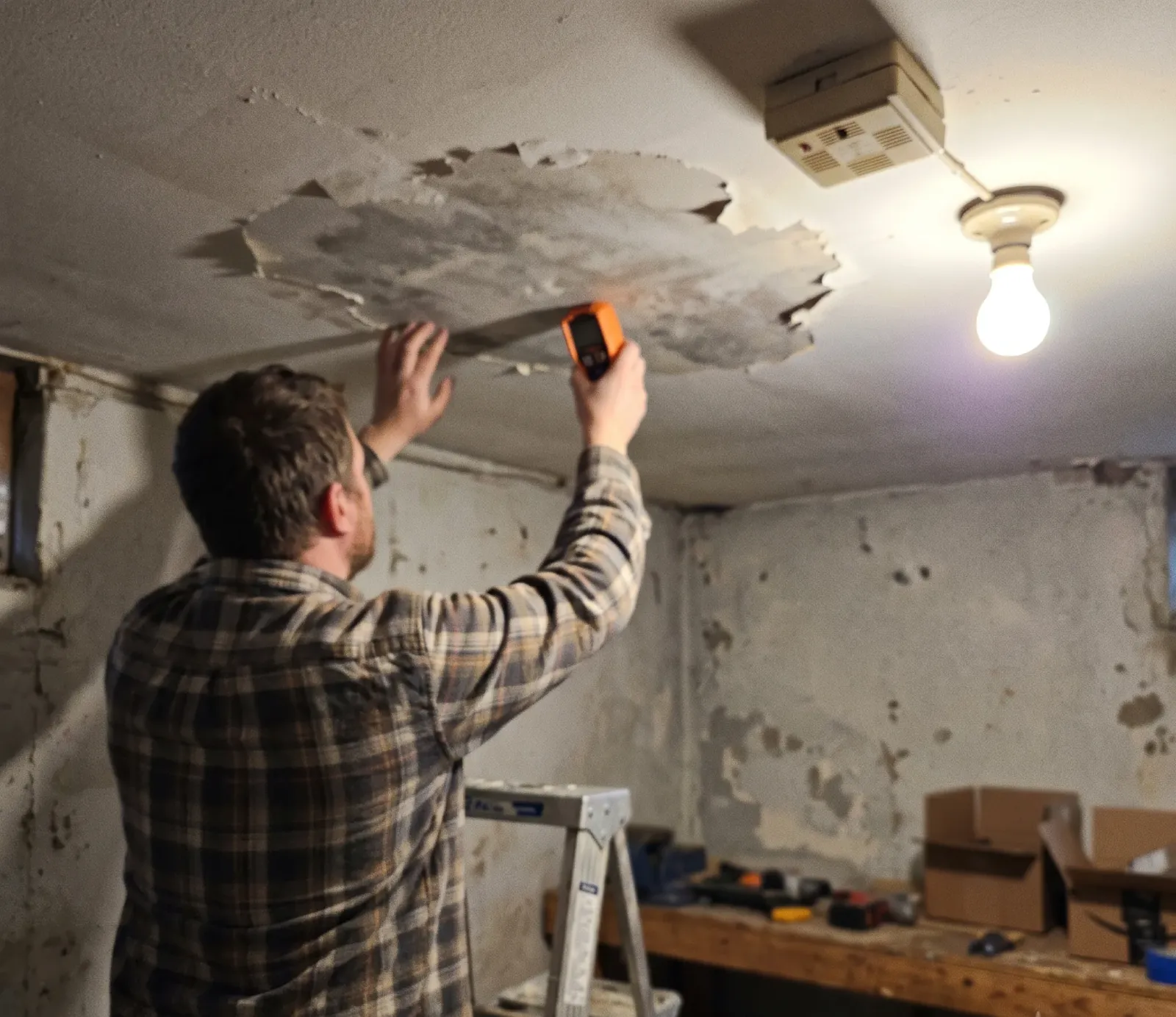
An infrared camera does not see moisture directly. It reads surface temperature, and a wet section of drywall or subfloor loses heat at a different rate than the dry material around it, which shows up on screen as a distinct thermal signature. That contrast is what a technician in Atlanta is actually reading when a wall cavity near a bathroom or kitchen line shows a cooler patch than the framing beside it. The camera flags where to check further; it does not measure the water itself, and treating the image as a final answer is where mistakes start.
What The Camera Sees
An infrared camera reads the heat signature coming off a surface, not what's underneath it. Wet drywall, wet insulation, and wet subflooring conduct and hold heat differently than dry material, so a damp patch inside a wall cavity often shows up as a cool spot against a warmer, dry background, or the reverse depending on conditions. The image is a thermal signature, a pattern of relative temperature. It's a clue pointing to where to look, not a finished diagnosis on its own.
Reading The Pattern
Interpreting the image takes more than spotting a dark patch on a screen. A tech has to consider what's behind that section of wall or floor, since a stud, a duct, or a plumbing line can create the same kind of temperature shift as moisture does. That's why the thermal image gets treated as a moisture profile across a room rather than a single reading. A cool patch that lines up with a known pipe run gets checked differently than one sitting in open wall with no obvious explanation.
Why No Demolition
The main reason this tool matters in an Atlanta home or building is that it doesn't require opening anything up to look. A wall cavity behind finished drywall, or subsurface moisture under original hardwood flooring, can be scanned in minutes without cutting a single inspection hole. That non-invasive inspection matters most in older intown housing stock, where hardwood over a crawl space or plaster walls make cutting test holes more destructive and more costly to patch than in newer construction.
Confirming What It Shows
A thermal image alone never confirms wet material — it's a screening step, not a lab result. Once a cool spot or an odd pattern shows up, the next move is a moisture meter placed directly on that spot to get an actual reading. This pairing matters because a thermal camera can flag a false positive: a spot that looks damp on camera but isn't, caused by something like an air gap, a temperature draft near a window, or a difference in the material itself rather than water.
Where False Readings Happen
Emissivity is one reason a thermal image can mislead someone reading it without training. Different materials radiate heat differently even at the same actual temperature, so a metal duct register and the drywall next to it can show up looking dramatically different in an infrared image without either one being wet. Direct sunlight through a window, a nearby HVAC vent, or a recently used shower can all shift surface temperature in ways that mimic moisture. Reading the camera without a meter to confirm is guesswork.
Slab And Crawl Space Use
One limit worth knowing before you rely on this: infrared cameras read temperature, not water directly. A cool spot on a wall cavity near Virginia-Highland or Poncey-Highland might be moisture, or it might be a stud, an air leak, or missing insulation showing a different thermal signature. That gap is why a false positive is possible and why a competent inspection always follows up a suspicious reading with a moisture meter before anyone calls a wall cavity wet.
Best Conditions For A Scan
Timing changes what a scan can find. A strong temperature differential between the air inside a home and the material being scanned makes patterns easier to read, so a scan run soon after a leak started, while materials are still actively drying or actively wet, tends to show a clearer thermal signature than one run days later after everything has equalized to room temperature. This is part of why speed matters after a leak is discovered, separate from any drying or extraction work that follows.
Basements And Foundation Walls
Atlanta's older housing stock, including homes near Grant Park and Kirkwood, often mixes plaster, later drywall patches, and uneven insulation inside the same wall, which gives a thermal camera more variables to sort through than a newer build near the Chattahoochee River would present. A daylight basement, common on the sloped lots typical of this city's ridge-and-valley terrain, adds another wrinkle: one foundation wall sits above grade and reads differently under infrared than the buried walls around it, even with no moisture present at all.
Where This Fits An Inspection
Thermal imaging is one part of a broader water damage inspection, alongside moisture meters and a visual walk-through of a property. It's useful for finding the edges of a problem, how far moisture has traveled through a wall cavity or under a floor, once the source is known or suspected. It doesn't replace locating the actual source of a leak, and it doesn't replace the extraction and drying work that follows once the full extent of the moisture is mapped out.
Getting An Accurate Read
Anyone dealing with a suspected leak in a home near Virginia-Highland, Grant Park, or a condo along the Buford Highway corridor can ask whether an inspection includes thermal imaging paired with moisture meter readings, not a camera scan alone. The licensed pros we connect you with in the Atlanta area use both together, because a camera without a meter to confirm its readings can send a repair in the wrong direction just as easily as it can find the right one.
Reading a Thermal Signature Correctly
The value of an infrared camera in a water damage inspection is what it rules out and what it points toward, not that it delivers an instant verdict on its own. It shortens the search for subsurface moisture in a wall cavity or under flooring without a single cut being made, which matters in Atlanta homes with original hardwood or finished basement walls. Paired with a moisture meter and read by someone who understands emissivity and false positives, it turns a guess into a mapped, non-invasive inspection.
Dealing with this in your home?
A basement near Ormewood Park can sit dry for a year, then take on water the first time a real downpour hits. Atlanta's red clay sheds rain rather than soaking it in, so water piles up against a foundation wall fast, especially on lots that slope toward Intrenchment Creek. This post covers what that pattern actually means for a home.