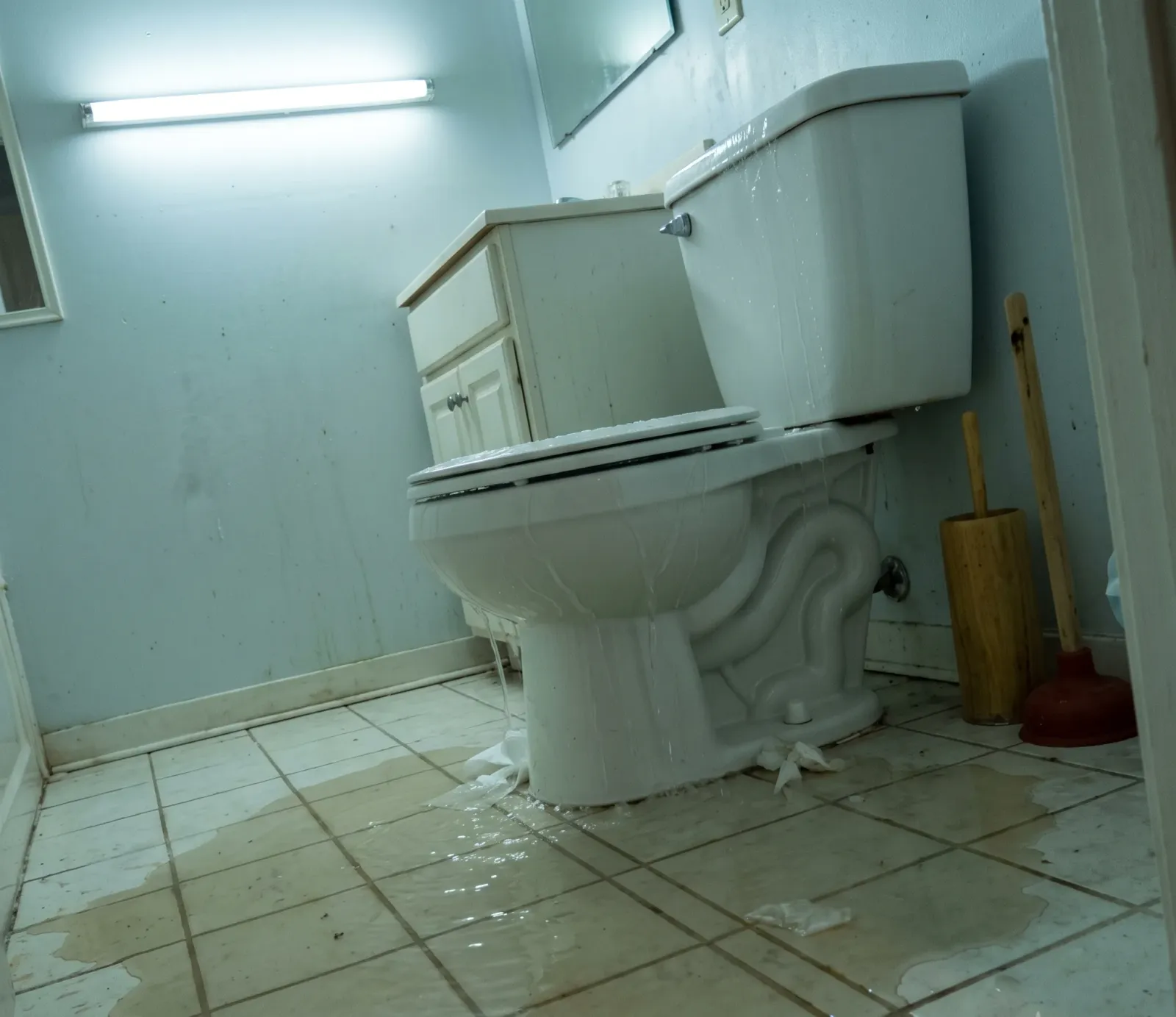
A toilet that overflows with sewage is not the same emergency as an overflowing toilet full of clean water. Raw sewage carries bacteria, viruses, and parasites that turn a five-minute mop-up into a biohazard situation. Before anything else, stop touching the water with bare skin and keep children and pets out of the room. The next several minutes matter more than the next several hours, because contaminated water spreads fast across a tile or hardwood floor and soaks into anything porous it touches, including baseboards, rugs, and the bottom of a bath mat.
Stop The Water Source First
The first real step is stopping the source, not the mess. If the tank is still running, lift the lid and press the flapper down by hand, or reach behind the toilet and turn the shutoff valve clockwise until it stops. If there is no visible shutoff or it will not turn, shutting off the main water supply line for the house is the more reliable move. A toilet that keeps refilling after an overflow is still feeding more contaminated water onto the floor, so this step comes before cleanup starts, not after.
Using A Plunger Safely
A plunger can help once the bowl itself has stopped actively overflowing, but it should be used carefully. Plunging while sewage is still standing on the floor pushes contaminated water and air around the bathroom and increases splash exposure. If a plunger is used, treat it afterward as contaminated: rinse it in a bleach solution and keep it away from any other cleaning tools until it has been disinfected. A plunger that will not clear the blockage after a couple of tries usually means the clog sits further down the sewer line, past what a household tool can reach.
Gloves And Protective Gear
Gloves are not optional here. Raw sewage can carry pathogens that enter through a small cut, a hangnail, or broken skin without a person noticing at the time. Rubber or nitrile gloves that go up past the wrist, and eye protection if there is any splash risk, are the minimum before touching anything in the affected area. Boots or shoes that can be removed and cleaned separately are worth putting on too, since walking contaminated water into another room on socked feet is one of the easiest ways cross contamination spreads through a house.
Ventilate The Bathroom
Ventilation matters more than most people expect in a small bathroom. Open a window if there is one, and run an exhaust fan if the bathroom has one, to start moving contaminated air out rather than letting it sit. Sewage odor is not just unpleasant, it is a sign of airborne particles that settle on nearby surfaces the longer a room stays closed up. If the bathroom has no window and no fan, propping the door open and pointing a box fan out through a hallway window is a reasonable substitute until professional cleanup arrives.
Sorting Affected Items
Anything the sewage touched needs to be sorted into what can be cleaned and what cannot. Hard, sealed surfaces like tile, porcelain, and sealed grout can usually be disinfected. Affected items that are porous, absorbent, or already showing water damage, such as bath mats, towels left on the floor, cardboard boxes, or unsealed wood, are much harder to fully decontaminate and are often not worth trying to save. Setting them aside in a garbage bag rather than putting them back into use is the safer call, even when the item looks fine once it dries.
Disinfecting With Bleach
A bleach solution is the standard first line of disinfection for hard surfaces once the standing water is gone. A diluted mix applied to tile, the base of the toilet, and any splashed wall surface, left to sit rather than wiped immediately, gives it time to actually kill what is on the surface rather than just spreading it around. Bleach should never be mixed with other cleaning products, especially anything containing ammonia, since that combination produces fumes that are dangerous in a small, enclosed bathroom.
Why Backflow Happens
Backflow is worth understanding here, because it explains why this happened at all. A toilet usually overflows with sewage rather than clean water when something downstream is blocked, in the fixture's own trap, in the branch line, or further out in the home's sewer line, and the water has nowhere to go but back up and out. In homes served by older infrastructure, a backup can also follow heavy rain, when the sewer system downstream is running at capacity and pushes back through the lowest fixture in the house instead of draining forward normally.
Checking The Wax Ring
A wax ring failure is a related but different problem worth ruling out. If the toilet itself is loose at the base, or water is seeping out from under it rather than only overflowing from the bowl, the seal between the toilet and the drain pipe may have failed. That is not something a plunger fixes, and running more water through a toilet with a broken wax ring pushes contaminated water under the floor rather than only on top of it, which is a different and often worse cleanup problem.
Document Before You Clean
Once the fixture stops overflowing, close the bathroom door if the sewage stayed contained there, and keep pets and kids out of the room entirely. Open a window for ventilation if the smell is strong, since raw sewage carries gases along with contaminated water. Do not run a fan that recirculates air into other rooms, and do not step through the puddle in bare feet or socks. Set aside any towels or rags used to blot the floor; they now count as affected items and belong in a bagged pile, not the laundry hamper, until you know how the cleanup will handle them.
Knowing When To Call In Help
A toilet that overflows with sewage rather than clean water usually means the blockage sits past the wax ring, somewhere in the branch line or main sewer line, and a plunger may push waste back up instead of clearing it. Skip test flushes and skip running other drains or washing machines nearby, since shared lines can send water backing up through a second fixture and spread cross contamination to areas that were never touched. Photograph the standing water and any soaked baseboards before you mop, then wait for someone with the right gloves and biohazard handling on hand to look at the sewer line itself.
Questions to Ask Before You Book
A sewage overflow in one bathroom, whether in a Grant Park bungalow, a Virginia-Highland craftsman, or a condo near Atlantic Station, is not a problem to fully resolve alone once raw sewage has spread beyond the toilet itself. The containment steps above limit the damage and protect the people in the house in the first several minutes. What happens after that, testing affected materials, deciding what can be saved, and clearing contamination that is not visible, is where a homeowner should expect to hand things off rather than push through alone.
Dealing with this in your home?
A basement near Ormewood Park can sit dry for a year, then take on water the first time a real downpour hits. Atlanta's red clay sheds rain rather than soaking it in, so water piles up against a foundation wall fast, especially on lots that slope toward Intrenchment Creek. This post covers what that pattern actually means for a home.