Warehouse & Industrial Facilities
Industrial Facilities
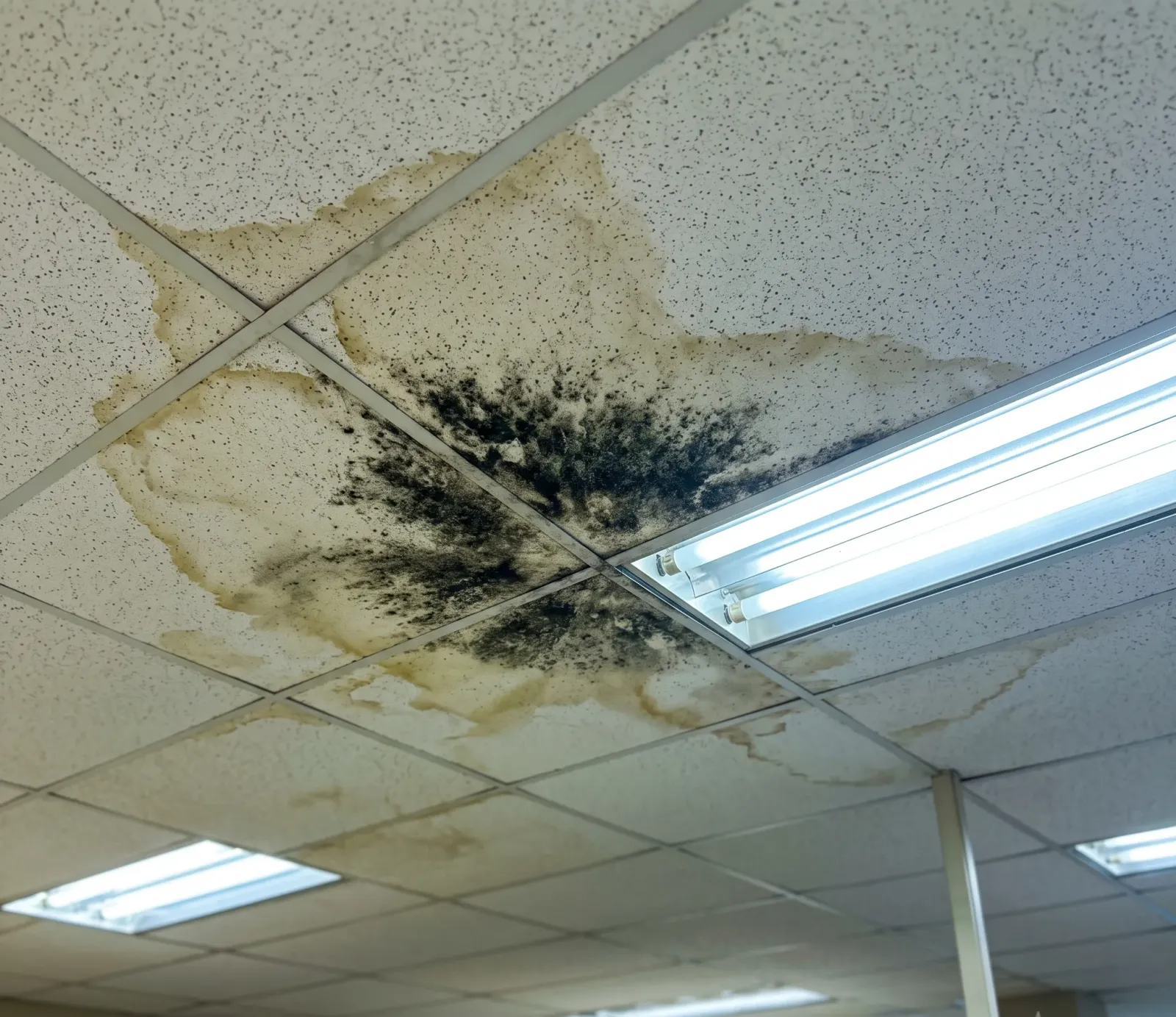
Getting an office suite or storefront dried out fast enough to reopen without a long closure.
Water damage in an Atlanta office or retail suite calls for drying that starts the same day, because every day a storefront or suite stays closed is lost foot traffic and lost sales, not just a repair bill.
An office suite and a retail storefront lose money differently, but both lose it the moment the doors stay closed. A leased space in a building along Peachtree Street or out near Perimeter Center runs on foot traffic and scheduled hours, and every day a water loss keeps a suite dark is a day of business interruption a property manager has to explain to ownership and a tenant has to explain to a lease. The response that matters most here is not the extraction itself but how fast someone qualified gets in the door.
Atlanta office and retail space covers a wide range of buildings, from older brick storefronts near Marietta Street to newer build-outs in Midtown towers, and the water problem changes with the building. A ground-floor retail unit takes on water differently than a tenth-floor suite below a drop ceiling that hides the actual source for hours. The common thread across the city is that commercial leases put the burden of proof on somebody, and figuring out who, fast, is part of getting the space open again.
The licensed pros we connect you with treat an office or retail loss as a building problem first, not a contents problem. That means checking common areas, shared walls, and anything serving more than one suite before assuming the damage stops at one tenant's door. In a multi-tenant building near Buckhead or Midtown, water rarely respects a lease line, and a response that only looks inside the affected suite can miss where the water actually came from.
A drop ceiling is one of the most common places water shows up first in an office suite, because it collects water from a floor above, a rooftop unit, or a plumbing chase before a single tile stains. By the time a discoloration appears, water may have been sitting above the ceiling grid for a while, wicking into insulation and wiring runs. In a leased suite, nobody notices until someone glances up, which is exactly why the delay between the actual leak and the discovery matters so much for how bad the damage gets.
Carpet tile, common in office suites from Buckhead to Perimeter Center, behaves differently than broadloom carpet during a water event. Individual tiles can be lifted, assessed, and in some cases replaced without redoing an entire floor, which keeps cost and downtime lower when the response is fast enough to catch the water before it wicks into the subfloor or the tile's own backing breaks down. Waiting turns a tile-by-tile fix into a full-floor replacement.
| Area | Risk | Business Impact |
|---|---|---|
| What's at stake | Foot traffic and daily sales | Comfort and personal belongings |
| Who decides | Tenant, landlord, or property manager | Homeowner alone |
| Server room or point of sale | Often after-hours only | Anytime, same key |
| Hidden risk area | Drop ceiling, server room, walls | Under flooring, behind baseboards |
| Cost of delay | Business interruption on top of repairs | Repair cost only, no lost income |
| Signage and storefront glass | Carpet tile often saved section by section | Restocking delays and inventory loss |
| Storefront and signage | Wind-driven rain, sign leaks | Lost foot traffic, closed entrance |
| Server room or IT closet | Ceiling leak above equipment | System outage, data risk |
A server room or IT closet in an office suite is a small space with an outsized amount at stake. Water intrusion near equipment that runs point of sale systems, phone lines, or a building's shared network drop is not just a drying job, it is a business continuity problem, and the licensed pros we connect you with know to flag that room for priority attention and coordinate with whoever manages that equipment before touching anything electrical.
Retail storefronts carry their own version of this risk in signage, point of sale terminals, and inventory sitting at floor level or on low shelving. A storefront near Atlantic Station or along Howell Mill Road in West Midtown that takes on water at the entrance or through a rear stockroom can lose product and equipment in the same event, and the clock on spoilage or corrosion runs faster than most people expect.
None of this waits for regular business hours. A leak found by a cleaning crew at night or a property manager doing a weekend walk-through needs the same fast response as one found at noon on a Tuesday, and after-hours access arrangements with a property manager are often the difference between catching a problem overnight and finding it Monday morning already spread through a common area.
Atlanta's older commercial buildings, particularly in and around Fairlie-Poplar and other pre-war blocks downtown, were not built with today's tenant improvement standards in mind, and a water event can expose plumbing or roofing conditions that predate the current lease entirely. A tenant discovering the source is a building-wide issue, not a suite-specific one, changes who needs to be called first.
In these buildings, a slow leak behind a wall or above a suite can travel along framing and structural elements before it ever reaches a visible surface, which is why an assessment in an older commercial space has to look past the finished wall or ceiling and not just at the stain. Getting that wrong means treating a symptom while the actual source keeps feeding it.
Georgia law puts the duty to keep a leased space in repair on the landlord, including plumbing kept in working order, and a leaking pipe is treated as a necessary repair the landlord has to address. For a commercial tenant, that means written notice to the property manager or landlord starts the clock, and documenting the water event clearly matters for whatever conversation about repair responsibility and lease obligations comes next.
That does not mean a tenant should wait on a landlord's timeline before getting water out of a suite. Georgia does not allow a tenant to simply stop paying rent over a repair dispute, but getting the space dried quickly is a separate question from who ultimately pays for it, and the two should not be tangled together while water is still sitting on the carpet tile or soaking into a ceiling.
A common area failure, a shared roof leak, or a burst line in a building serving multiple suites near Perimeter Center or Cumberland raises a different question than a single-tenant loss: who else is affected, and how many businesses in the same building need to be reopened at once. That is a coordination problem as much as a drying problem, and it usually runs through the property manager rather than any one tenant.
A property manager weighing repairs against a lease's downtime clause needs a clear number before signing off on anything. After drying is underway, the pros connect you with an assessment of what carpet tile, drop ceiling grid, or drywall in the suite needs replacing versus what dried clean, plus a timeline for getting a storefront or office back to full foot traffic. That assessment can also support a claim filed against the building's coverage or a tenant improvement allowance, so the numbers hold up if the landlord or an adjuster asks how the figure was reached.
A suite that floods on a Friday night can sit until Monday unless the property manager has an after-hours contact ready to call. That gap is where damage grows fastest — carpet tile wicking water sideways, a drop ceiling holding it overhead until a tile finally gives. Building management in the Peachtree Center corridor and similar high-occupancy addresses benefit from having that contact listed before it's needed, not during the call itself.
Timing decides more than technique. Once carpet or drywall stays wet past a day or two in this humidity, colonization risk climbs fast, whether the house sits near Peachtree Creek or up on a drier ridge lot. Getting air moving and moisture measured early is what keeps a small leak from turning into a bigger rebuild.East Atlanta Village 30316, Kirkwood 30317 and West Midtown 30318. Water moves differently depending on where a house sits. A slab off Cascade Road behaves nothing like a basement in Ormewood Park, and a crawl space off Utoy Creek holds moisture longer than one on a ridge above it. The right drying plan starts with reading the property, not guessing from the ZIP code.
Summer humidity works against a wet house long after the water itself is gone. A crawl space near the Chattahoochee River or a slab-on-grade unit in West Midtown both stay damp longer in July than in November, and that extra time is exactly the window mold uses to take hold in a space that was not dried fast enough.A commercial loss in Atlanta, from a Buford Highway strip retailer to a Perimeter Center office floor, usually carries a wider drying footprint and equipment count than a house. Expect the estimate to separate square footage, dehumidifier count and days running, since that combination drives the total more than the water source itself. pricing guide, and the commercial overview covers how a scheduled program works.
Industrial Facilities
Campus Property
Multifamily Response
It depends on what got wet and how fast someone caught it. A point of sale terminal or server room rack that took water needs power cut and equipment checked before anything else happens. Carpet tile can often be lifted, dried underneath, and reset the same day. A soaked drop ceiling grid usually means replacing tiles, which is quick, but tracing where the water actually came from takes longer.
Notify the property manager first since most leases route repair responsibility and common-area access through them, then document the affected suite with photos before anything gets moved. If the source is a shared line or roof drain, that's a common-area issue rather than a tenant one, which changes who is expected to arrange the fix under most lease terms.
Reopening safely means checking that outlets and any point of sale or server equipment near the affected area weren't compromised, that carpet tile or flooring has actually dried through rather than just on the surface, and that a damp drop ceiling isn't still holding water overhead. None of that is guesswork — moisture readings taken during drying show whether the space is actually ready for foot traffic again.
After-hours and weekend access is common for offices and retail spaces along corridors like Howell Mill Road, since most tenants would rather not have drying equipment running during business hours in front of customers. The licensed pros we connect you with can coordinate directly with a property manager or a listed after-hours contact to get in without disrupting the next day's foot traffic.
Call now to get a licensed pro assessing your Atlanta office or retail suite today, before the closure runs longer than it has to.
Call (404) 496-7950