Student Housing & Campus Buildings
Campus Property
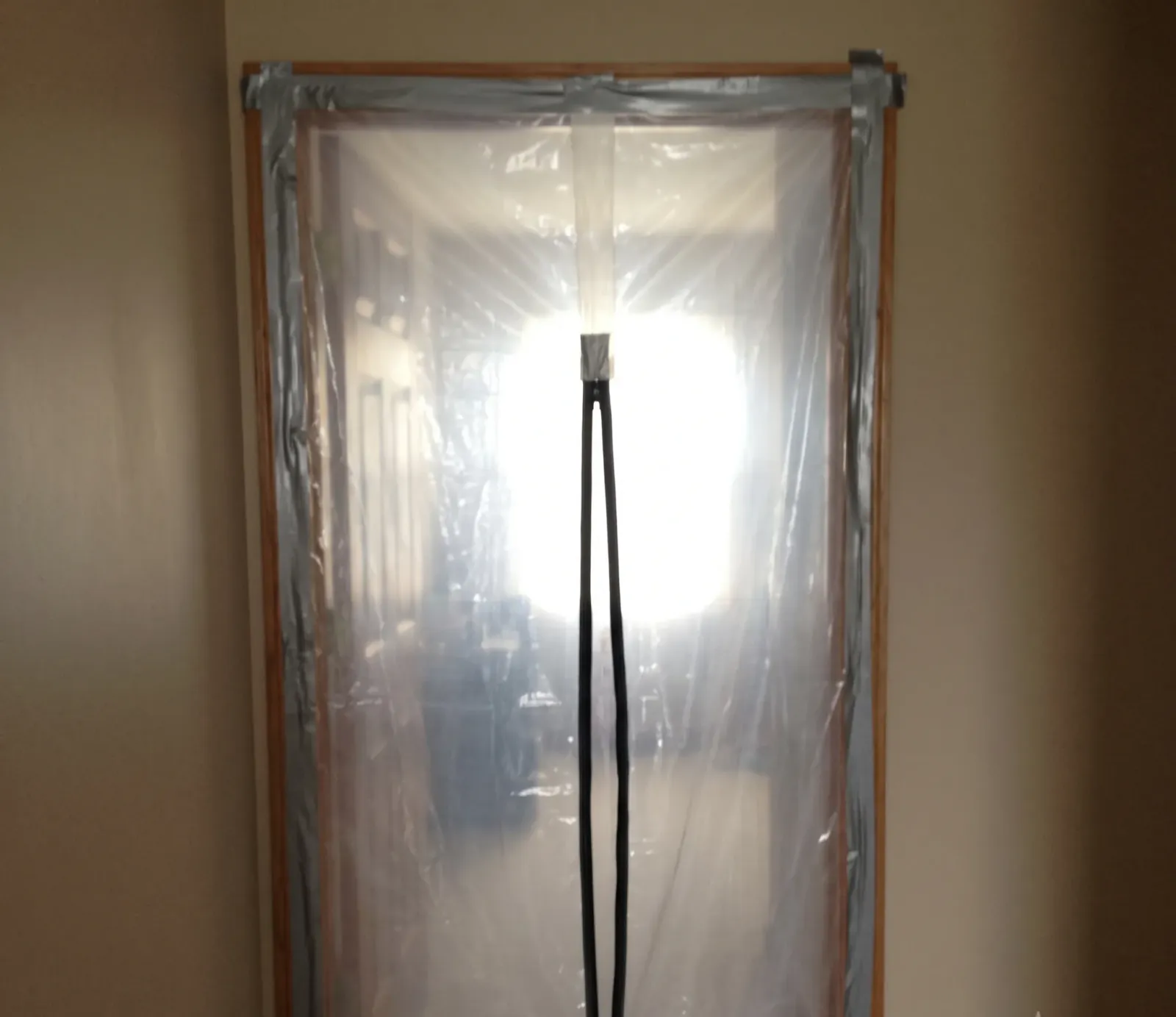
Drying and documentation built around infection control, not a standard commercial cleanup.
Water damage in a clinic or medical office in Atlanta needs infection-control-compliant drying, not standard extraction, because affected rooms often can't reopen to patients until airborne contaminant and biohazard concerns are documented and cleared.
A water leak in a clinic or medical office is not the same event it would be in a retail suite next door. Exam rooms, patient rooms, and sterile supply storage carry infection-control requirements that a burst line or overflowing fixture can compromise in minutes, not days. Standing water and the airborne contaminant risk it creates once mold begins to colonize turn an ordinary drying job into a compliance question, and a facility in Buckhead, Midtown, or along the Clifton Corridor near Emory University Hospital cannot treat that the way a general office would.
Atlanta's healthcare footprint runs from small independent practices near Peachtree Road to larger facilities close to the Emory University campus and the Clifton Corridor's medical district. Whatever the size, a water event touching a patient room or a supply area used for sterile supplies raises the same question first: is the space still safe to treat patients in, and can regulated medical waste or biohazard material have been affected. That question has to be answered before normal drying protocol even starts.
This page covers what actually differs for a medical or healthcare facility versus any other commercial tenant: the infection control stakes, the HVAC and airflow considerations, the compliance paperwork a facility administrator has to be able to produce afterward, and why a delay here carries patient safety consequences that a retail space simply does not have. None of this is generic commercial water damage with the industry name swapped in.
Water intrusion near a patient room changes the infection control calculus immediately. A wet carpet or ceiling tile is a contamination risk in a space where immunocompromised patients may be present, and the usual approach of drying in place is not automatically safe. HVAC systems in medical buildings are often designed around specific airflow patterns, sometimes including negative pressure in isolation areas, and water damage to ductwork or air handling equipment can disrupt that pattern in ways that matter well beyond the wet material itself.
Where a facility maintains isolation protocol for any part of its patient population, a water event has to be assessed against whether it interrupts that protocol, not just whether it damages the ceiling or wall it touched. The licensed pros a facility connects with for this kind of loss need to understand ICRA-style containment thinking even where a formal ICRA is not required for the repair itself, because the containment barrier used during drying work has to hold to the same standard the space already operates under.
| Concern | Standard Space | Medical Space |
|---|---|---|
| Room clearance | Infection-control check required | Dry-to-touch is enough |
| ICRA containment barriers | ICRA-style paper trail | Basic drying log |
| Airflow handling | Negative pressure rechecked | Standard HVAC restart |
| Contaminated waste | Biohazard protocol first | General debris removal |
| Affected supplies | Sterile stock discarded | Wiped down, reused |
| Patient scheduling | Paused until cleared | Isolation protocol may restrict which doors open |
| Airborne contaminant control | Open fans, open windows | Negative pressure and HVAC coordination first |
| Waste handling | Standard debris disposal | Regulated medical waste kept separate |
Category matters more here than on a typical commercial job. A supply line leak behind a sink is a very different response than water that has come from a drain line or backed up through a floor fixture, and in the older, intown parts of Atlanta served by combined sewer infrastructure, a heavy storm can push sewage-contaminated water backward into a lower-level fixture if backflow protection is inadequate. A facility storing sterile supplies or regulated medical waste anywhere near that path needs the category of the water identified before anyone decides what can be salvaged.
Biohazard exposure is the other question a medical facility has to ask that most commercial tenants never do. If contaminated water reached an area used for regulated medical waste, or if a spill involved anything beyond clean water, the drying and disposal decisions change, and documentation of what was affected and how it was handled becomes part of the record a facility may need later for its own compliance file, separate from any insurance paperwork.
Atlanta's summer humidity means a wet space that is not actively dried stays hospitable to mold growth within roughly a day or two at normal indoor temperatures. In a clinic, that is not an abstract maintenance concern — an airborne contaminant issue in an exam room or a supply closet is a patient safety issue the moment it exists, which is why the timeline for drying in a medical setting is treated as tighter than the same job would be treated in an office down the street.
HIPAA does not govern water damage directly, but it shapes how a facility has to handle the disruption around it. Paper charts, workstations, and any physical records in an affected patient room or exam room have to be moved, protected, or documented in a way that keeps the facility's privacy obligations intact even while contractors are on site. That is a layer of coordination a retail space never has to think about, and it changes who needs access to which room and when.
Compliance documentation after a water event in a medical facility often has to satisfy more than one audience: the facility's own infection control policy, its accrediting body, and its insurer. The licensed pros connected through this process should be able to produce a clear record of what areas were affected, what containment was used, and what was cleared before patient use resumed, because a facility administrator may need to show that record well after the drying equipment is gone.
Downtime pressure in a medical facility is not measured the way it would be in a store closed for a weekend. Every day an exam room or patient room stays offline is a day of rescheduled care, and depending on the practice, that can mean patients going without treatment they need rather than simply shopping somewhere else. A facility near the Atlanta University Center, Buckhead's core commercial district, or the offices along Peachtree Street has patients counting on continuity, not just a lease to protect.
That pressure is why speed and sequencing matter more here than the size of the water loss itself. A single affected exam room might be a small drying job by square footage, but if it is the room a facility depends on for a specific service line, getting it back in service safely is the priority, ahead of anything else on the punch list. Sequencing the work around what the facility needs open first is part of handling this correctly.
A basement-level facility or one in a building with mechanical or storage space below grade carries an added layer of risk during heavy rain, since Atlanta's older combined sewer areas can see backflow into low fixtures during a big storm. A facility anywhere in the metro, from Sandy Springs down through Decatur, should know whether its building has adequate backflow protection before an event forces the question, because a sewage-contaminated water loss in a healthcare setting is treated as contaminated water requiring different handling from the outset, not degrees away from a normal cleanup.
None of this replaces a facility's own infection control policy or its relationship with its accrediting body. What the licensed pros connected through this service can do is treat a water loss in a clinic or medical office the way it actually needs to be treated: contained properly, documented clearly, and prioritized around patient safety rather than square footage. A facility that has been through this once usually asks about containment and documentation before anything else the next time.
A medical office near the Clifton Corridor cannot treat a water event like an ordinary tenant would. Exam rooms and any space storing sterile supplies need documented drying and disinfection before a clinic reopens, and regulated medical waste generated during cleanup has to be bagged and handled apart from ordinary debris. HVAC zones connected to a patient room may need isolation protocol or temporary negative pressure while drying equipment runs, so a contaminated air path does not carry an airborne contaminant into occupied areas. The licensed pros we connect you with document each step for compliance review, because patient safety and HIPAA-conscious handling of any exposed records matter as much as the drying itself.
Red clay under Atlanta drains slowly, so water that falls near Peachtree Creek or the Chattahoochee tends to sit against a foundation instead of moving off. Homes near Candler Park or Kirkwood can hold that moisture for days. The licensed pros we connect you with treat slow-draining clay as reason to check sooner, not later.Brookhaven 30319, Emory 30322 and Lindridge-Martin Manor 30324. Wet drywall or carpet left standing in Atlanta's summer humidity does not get a grace period, since damp indoor air keeps materials from drying on their own. Left alone near Peachtree Creek or anywhere else in the city, that dampness sets the stage for a bigger problem within days. Calling early is what actually limits the damage.
Water moves downhill fast in Atlanta because the red clay under most yards barely lets it soak in. Near the Chattahoochee River, in low spots by Peachtree Creek, or under an older foundation in Grant Park, that runoff finds the nearest crack or low seam within hours. The licensed pros we connect you with pull moisture out before it settles into framing or drywall.A commercial loss in Atlanta, from a Buford Highway strip retailer to a Perimeter Center office floor, usually carries a wider drying footprint and equipment count than a house. Expect the estimate to separate square footage, dehumidifier count and days running, since that combination drives the total more than the water source itself. pricing guide, and the commercial overview covers how a scheduled program works.
Campus Property
Multifamily Response
Condo & HOA
Yes. The approach is to isolate the affected area with containment barriers and negative air pressure before any demolition or drying begins, so airborne particulate and moisture do not travel into occupied exam rooms or patient rooms elsewhere in the Atlanta building. Work sequencing follows an ICRA-style plan, and adjacent departments can typically keep operating while the isolated section is dried and repaired.
Anything a water event exposes that qualifies as regulated medical waste, or supplies that were sterile and are no longer protected, gets bagged and handled separately from ordinary water-damaged building material. The restoration crew coordinates with the facility's own waste handling process rather than disposing of anything themselves, since medical waste handling in an Atlanta facility follows the practice's existing procedures, not a generic cleanup routine.
Documentation is kept at the level a healthcare compliance file expects: moisture readings, containment setup, air quality monitoring where used, and dated photos of each isolated zone. That record supports both the facility's own infection control log and any insurance claim, and it is written so a compliance officer at a clinic near Emory University or in Midtown can review it without translation.
HIPAA governs patient information, not building materials, so it does not change how water extraction or drying equipment is used. What it does change is access: technicians working in or near patient rooms follow the facility's own visitor and PPE protocols, and any paperwork the crew leaves behind identifies rooms by number, never by patient.
Call now to start infection-control-compliant water damage response for your Atlanta medical facility before patient rooms have to close.
Call (404) 496-7950